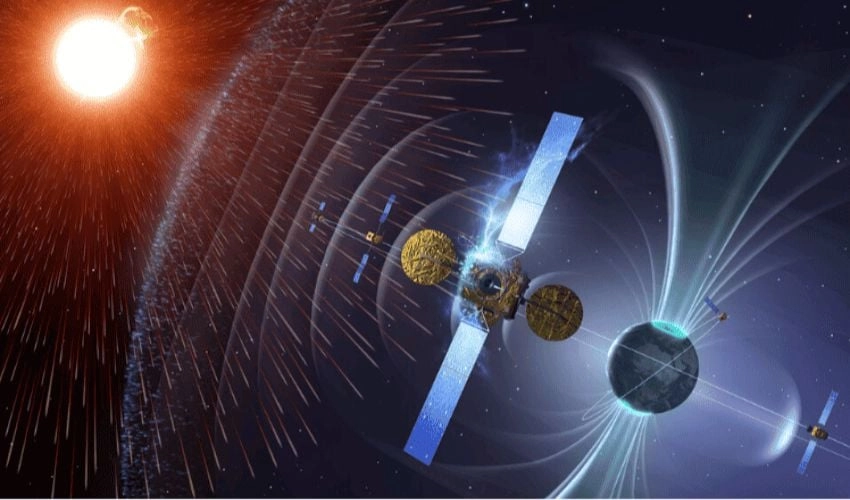
Space is known for its extreme conditions, particularly radiation risks that astronauts face during their missions. Unlike Earth, where we are sheltered by the atmosphere, space exposes both astronauts and their equipment to higher levels of radiation, which can result in malfunctions and severe health issues. Therefore, developing effective radiation protection is crucial for space exploration.
Researchers at Ghent University in Belgium are tackling this challenge by investigating 3D printed hydrogels. These materials, famous for their ability to retain large volumes of water, present a novel approach to shielding against cosmic radiation. Understanding hydrogels and their functionality in blocking radiation is essential to this study.
When pondering about space, many envision an empty vacuum; however, it’s filled with high-energy particles traveling near the speed of light, primarily from the Sun. Studies suggest that water can be an effective radiation barrier, due to its density and high hydrogen content, which slows down radiation particles. Unfortunately, using water as a protective measure has its drawbacks; carrying large water tanks would hinder astronaut mobility, and if not properly managed, any leaks could damage delicate electronic instruments.
To overcome these challenges, the Ghent University team is investigating superabsorbent polymers (SAP) as a safer alternative to water. These materials can absorb significant volumes of liquid relative to their weight, transforming into a gel known as a hydrogel when saturated. Researcher Lenny Van Daele notes that hydrogels are commonly found in everyday products, such as contact lenses and diapers, and have proven useful in medical applications for repairing tissues.
Hydrogels present a promising solution for radiation protection in space environments, whether within space stations or astronauts’ suits. Their design ensures that the retained water remains stable and minimizes leakage risk. In cases where the gel does experience a leak, the water remains contained long enough for astronauts to secure themselves. Manon Minsard from the research team states that their chosen method involves 3D printing, enabling the creation of hydrogels in virtually any desired shape.
The team has successfully demonstrated hydrogels’ suitability for space. They are now focused on refining their production techniques to allow for the efficient creation of 3D structures, aiming for scalability in manufacturing.
If you’re interested in the innovations surrounding 3D printed hydrogels for space protection, you can explore more about this development in the context of aerospace and defense. Stay updated on 3D printing advancements by signing up for a regular newsletter or following relevant social media channels.