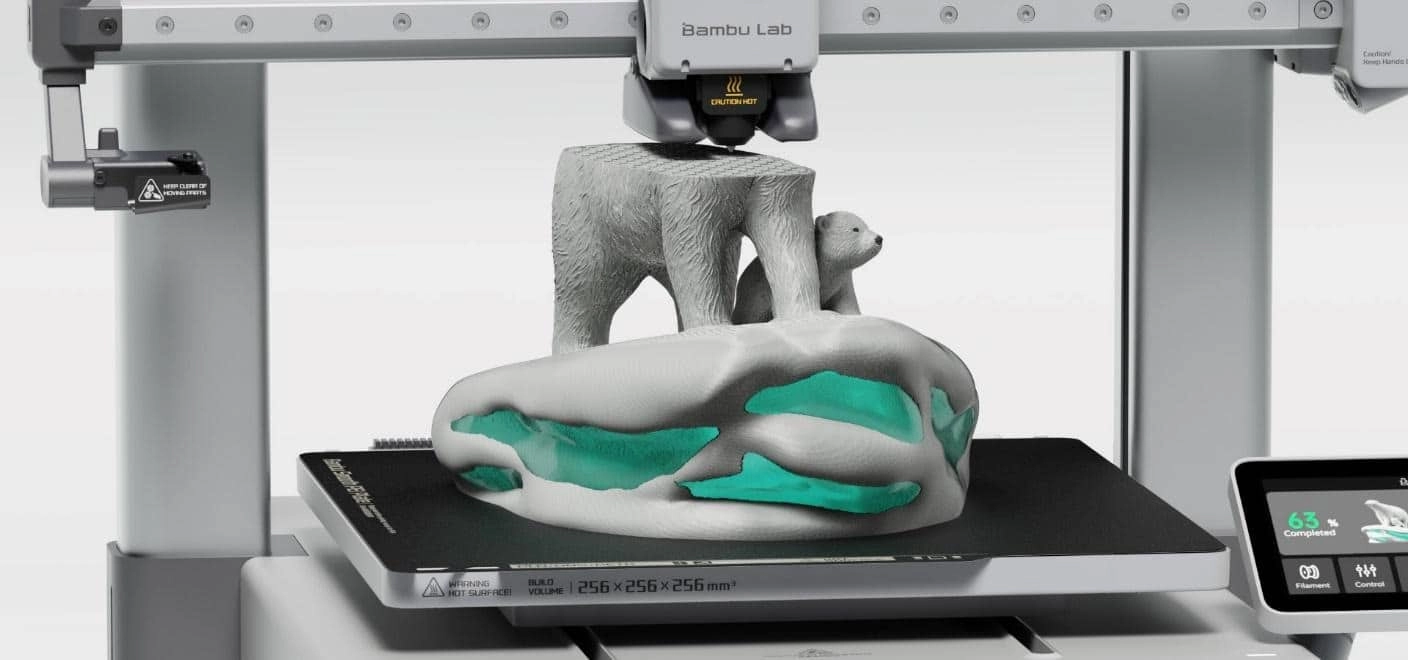
In recent years, consumer 3D printing has gained significant traction, attracting a diverse audience eager to explore this technology. For beginners, choosing the right 3D printer can be daunting given the myriad of models and features available. This guide highlights essential factors to consider when selecting your first 3D printer, and presents top recommendations.
Is Owning a 3D Printer Worth It?
Investing in a 3D printer involves both time and money, leading many to question its value. The benefits are extensive; once familiar with the technology, users can unleash their creativity for various applications, from creating household items to educational models.
Unlimited Creativity for Various Settings
Owning a 3D printer allows users to bring their ideas to life within hours. The potential applications range from household gadgets to STEM educational tools.
Simplicity for Beginners
Many of today’s beginner-friendly 3D printers, such as those from Bambu Lab, emphasize ease of use. Users can typically start printing within minutes as these devices require minimal setup or technical knowledge.
Affordability in 2026
The entry-level price range for 3D printers has dropped to between $200 and $400, making it a viable option for many. Models like the Bambu Lab A1 and A1 Mini exemplify how capable and budget-friendly 3D printers have become.
Recommended Beginner Printers: Bambu Lab A1 and A1 Mini
The Bambu Lab A1 and A1 Mini stand out due to their user-friendly features and impressive capabilities. Here are some reasons they are ideal for newcomers:
- Hassle-Free Setup: These printers minimize the common frustrations associated with calibration and adjustment, allowing users to start printing quickly.
- Affordable Pricing: The A1 starts at $299 and the A1 Mini at $219, making them excellent entry-level choices.
- Quiet Operation: Operating at just 48 dB, they are ideal for shared living spaces.
- Multicolor Printing: The optional AMS Lite accessory supports up to four colors or materials in a single print.
- Compact Design: The A1 Mini’s compact size makes it perfect for limited desk space.
Suitable Users
These models are perfect for beginners, families, educational settings, and individuals residing in apartments.
Upgrading Options: Bambu Lab P1S and P2S
For users ready to advance their 3D printing skills, the Bambu Lab P1S and P2S offer enhanced features without added complexity.
- Material Versatility: The enclosed design maintains stable temperatures, allowing the use of a wider variety of filaments.
- Safety Features: Fully enclosed structures keep hot components secure, making them safer for homes with children or pets.
- Speed and Quality: Thanks to their CoreXY motion system, these models boast higher speeds and improved print quality.
- Advanced Printing Capabilities: They allow for multi-color and multi-filament printing, with the P1S able to handle up to 16 colors compared to 20 for the P2S.
Ideal Users for Upgrades
These printers are perfect for those looking to expand their skills, small workshops, startups, and hobbyists who need greater material flexibility and capability.
Key Considerations When Choosing a 3D Printer
- Experience Level: Beginners should favor user-friendly models like the A1 and A1 Mini, while those familiar with 3D printing might consider the P1S and P2S for more advanced applications.
- Project Size: Consider what you intend to create. Smaller projects may be well-suited for the A1 models, while larger items necessitate the P1S or P2S.
- Budget, Ease of Use, and Long-Term Value: While the initial cost is essential, think about your longer-term needs and which printer aligns with your future 3D printing aspirations.
Conclusion
In conclusion, finding the right 3D printer for beginners involves identifying a model that meets your specific requirements. The Bambu Lab A1 and A1 mini are excellent starting points, while the P1S and P2S offer room for growth as skills develop. All four models are ready to use without the need for extensive setup, making them suitable for beginners.