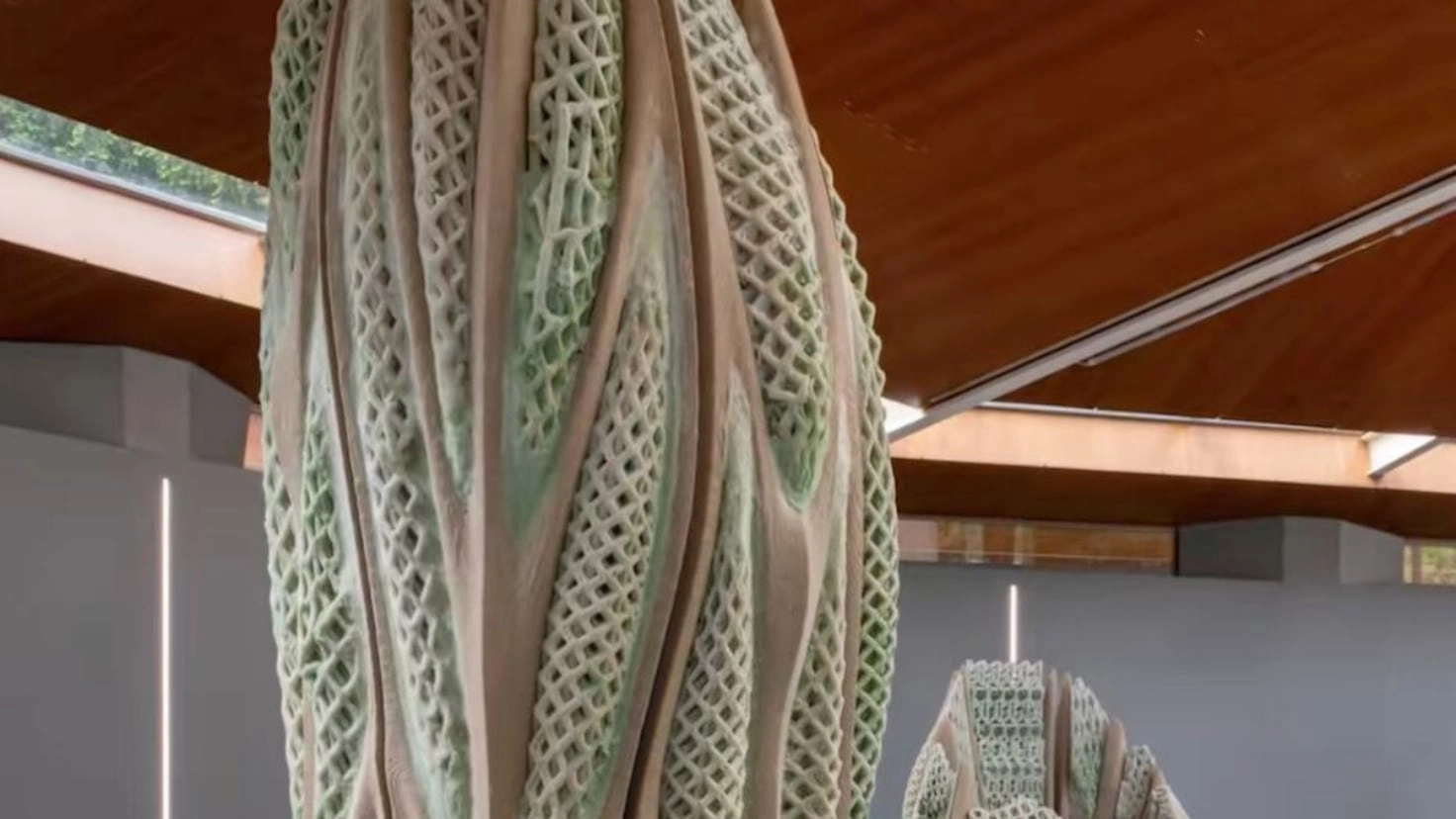
Swiss architects have unveiled innovative living buildings through a project named Picoplanktonics, aimed at addressing CO₂ absorption.
Presented at the 2025 Venice Biennale, this groundbreaking initiative from a team of scientists at ETH Zurich involves 3D-printed structures integrated with ancient marine cyanobacteria. These living microorganisms are embedded into the material itself, enabling them to capture CO₂ from the air and convert it into minerals and living biomass.
These structures possess the ability to grow and adapt, functioning like true living organisms. To thrive, they require specific conditions such as light, water, and nutrients, which necessitated professional oversight during their exhibition in Venice.
Significant CO₂ Absorption
Each structure can absorb as much as 18 kilograms of CO₂ annually, which is equivalent to the amount captured by a pine tree over 20 years. The project seeks to harmonize ancestral biological methods with cutting-edge technology, aiming for an architectural approach that collaborates with nature rather than dominates it.
A TikTok user recently highlighted the project’s essence, emphasizing its combination of biological legacy and futuristic innovation. The initiative raises an ethical question regarding the extent of human intervention in the design of living organisms. As humans can now cultivate architecture, it prompts reflection on the sustainability and ethical boundaries of such endeavors.
For further insights on this pioneering project and its implications, you can explore more about Ciencia, Suiza, and Arquitectura.