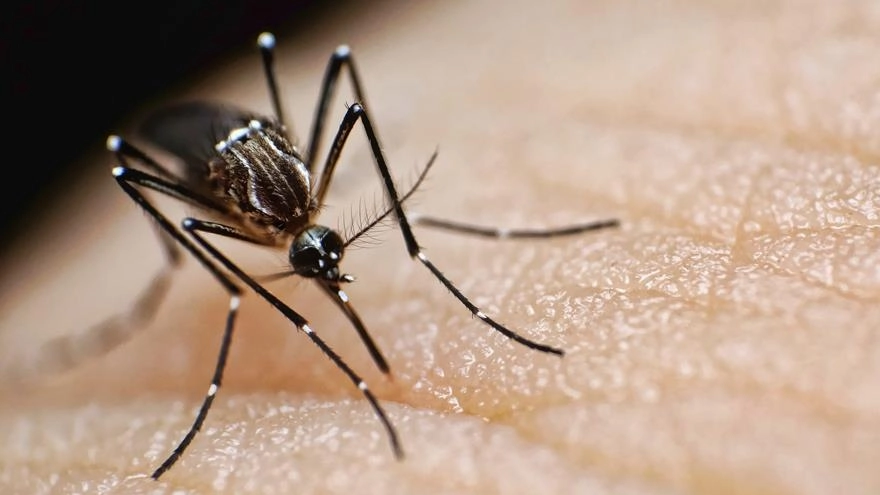
Researchers from McGill University and Drexel University have pioneered a method to utilize the feeding tubes of female mosquitoes, known as proboscises, as high-resolution tips for 3D printing. This innovative approach, detailed in the journal Science Advances, reveals that these natural structures can extrude material to finer resolutions than conventional commercial tips, potentially revolutionizing fields like regenerative medicine and drug screening by creating microscopic structures and tissue samples at a lower cost.
Changhong Cao, PhD, an assistant professor at McGill and a co-author of the paper, explained that mosquito proboscises allow for the production of small and precise structures that are often expensive or difficult to manufacture using traditional tools. These biological nozzles are not only cost-effective—repurposed from discarded materials—but also biodegradable.
The study describes a process termed "3D necroprinting," which leverages non-living biological structures for advanced manufacturing. The research was spearheaded by McGill graduate student Justin Puma, who previously explored the application of mosquito proboscises for biomimetic purposes.
Advancements in 3D bioprinting have soared in the last decade, particularly in creating biological models. Researchers at Drexel have significantly contributed to this field, producing devices capable of printing tumor-like structures for cancer treatment. However, to further advance tissue modeling, continuous refinement of printing techniques is essential. Megan Creighton, PhD, from Drexel’s College of Engineering and a co-author of the study, underscored the significance of accuracy in mimicking biological tissues, which leads to improved treatment designs.
Comparatively, the traditional glass dispense tips used in 3D printing can only extrude materials down to 40 microns and are fragile, costing around $80 each. In contrast, repurposed proboscises can be obtained for just 80 cents and are more durable, offering a sustainable alternative without sacrificing quality.
The researchers highlighted nature’s adaptability, noting that the structural properties of insect proboscises and other biological materials could be harnessed for various applications. Careful removal and attachment of the proboscis to a common dispenser tip enabled the team to test its efficiency in printing high-resolution structures.
Demonstrations included printing designs like a honeycomb and a maple leaf, showcasing the proboscis’s functionality. The findings revealed consistent layer thickness and fidelity in structures printed with bioink, hinting at its potential for applications in testing and drug delivery systems.
The unexpected exploration into mosquito proboscises stemmed from a previous research initiative by Creighton to develop a topical application to prevent mosquito bites. Their combined expertise in biology and engineering led to the novel idea of leveraging the proboscis for 3D printing, turning a pest into a promising technological asset.
Moving forward, the researchers plan to investigate the efficacy of other biological structures, such as those from snakes and scorpions, as potential dispense tips in 3D printing. Insights gained from such studies could unveil even more advancements in additive manufacturing and material science.
For more information, you can read the full research paper here: Science Advances.