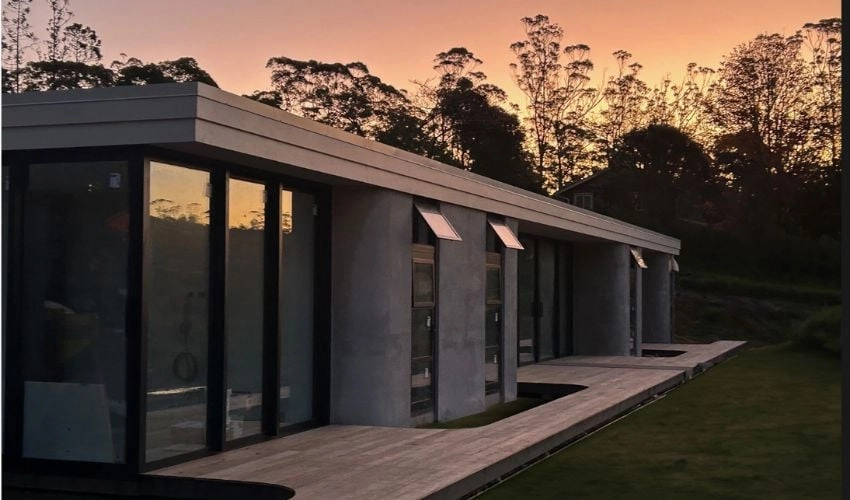
The construction industry is in transformation due to advancements in 3D printing technology, leading to the creation of diverse structures ranging from shopping malls and homes to boats. This innovation provides solutions to key issues such as rising material costs and increased demand for new construction. QOROX, a notable player in the field, has harnessed 3D printing extensively to realize its construction projects. To delve deeper into this change, we spoke with Wafaey Swelim, the director of QOROX, who shared insights into the impact of 3D printing on construction.
QOROX is dedicated to redefining construction practices by using additive manufacturing to create structures using low-carbon inks. The shift to 3D printing arose from identifying common industry challenges, including labor shortages, escalating material prices, and an ever-growing demand that traditional methods struggle to meet. Improving efficiency and productivity, while adopting sustainable practices, is essential to reducing costs associated with housing and other buildings.
QOROX has utilized 3D printing for a variety of applications. Their projects include homes, commercial properties, playgrounds, and infrastructure projects such as flood prevention systems and seawall constructions. The innovative use of 3D printing extends to creating coral reefs in partnership with Auckland City Council, showcasing the versatility of this technology.
The materials employed by QOROX include a locally-sourced ink known as Q-Ink, which reduces carbon dioxide emissions by 30% compared to conventional cement. Since 2019, QOROX has collaborated with CyBe 3D, a printer supplier, expanding its capabilities in Australia and New Zealand.
Some of their noteworthy projects comprise the world’s first passive solar house constructed with 3D printed walls and one of the largest 3D printed homes spanning 252 square meters. They have also designed commercial buildings like daycares and sports facilities, furthering their commitment to innovative construction methods.
Looking forward, Swelim envisions a future where 3D printers become integral to construction teams, standing alongside traditional equipment like excavators and cranes. The adoption of this technology is expected to enhance productivity, decrease construction durations, and better manage costs associated with building projects.
In his closing remarks, Swelim emphasized that the existing model in the construction sector is unsustainable in the long term. Improving construction methods through 3D printing could drastically change the landscape, encouraging more efficient processes and alleviating prevalent pressures in the industry.
For more insights into the evolving role of 3D printing in construction, visit QOROX or follow industry news on 3Dnatives.