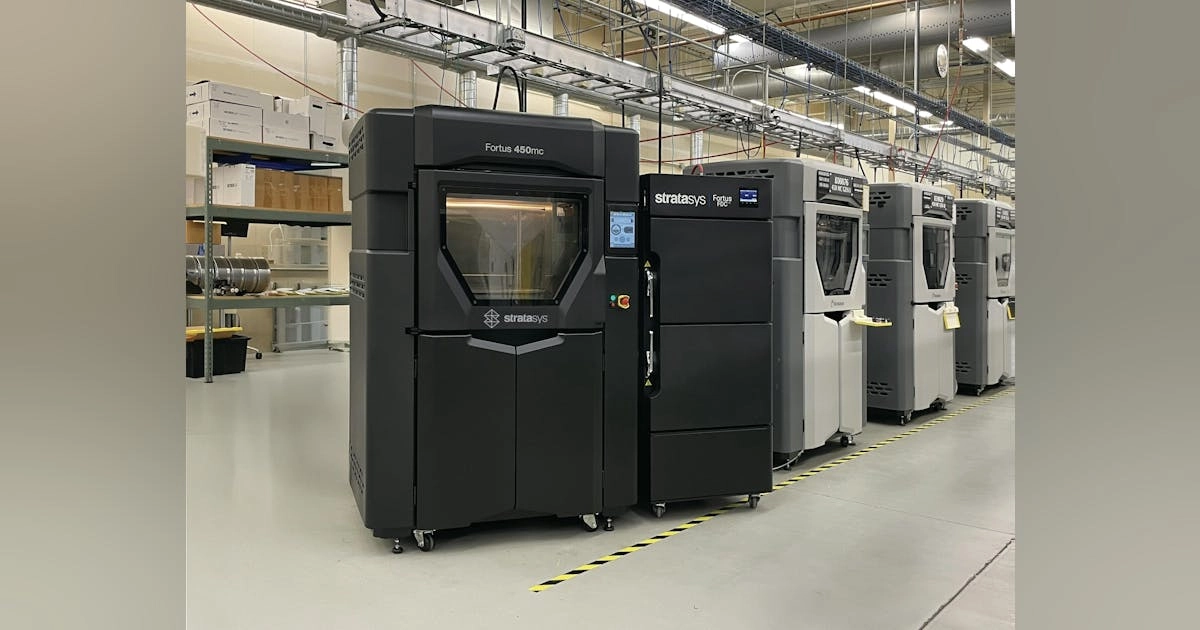
Stratasys recently celebrated the 10-year anniversary of its Fortus 450mc industrial 3D printer, which continues to be a significant player in the additive manufacturing space. This printer not only demonstrates durability and reliability but has also been integral in sectors like aerospace and automotive, where it produces essential components such as high-strength fixtures, tooling, and final parts.
Rich Garrity, Stratasys’ chief business unit officer, highlighted the Fortus 450mc’s ability to work with high-performance thermoplastics, stating that it was built with longevity in mind. The open architecture design of the printer allows for easy upgrades, facilitating scalability in production as business needs evolve.
Over the years, Stratasys has adapted its offerings based on user feedback. Companies emphasized the need for flexibility and repeatability in production-grade systems. Consequently, Stratasys has expanded its material portfolio and integrated enhanced software capabilities into its offerings.
To commemorate its decade in the industry, the Fortus 450mc has received significant upgrades, including improved components for abrasive materials, an all-materials license for greater access to the material portfolio, and new software licenses for enhanced cybersecurity and production monitoring. These developments are aligned with the growing push toward Industry 4.0, where real-time data and operational efficiency are paramount.
Stratasys has observed a notable shift in the role of 3D printing from mere prototyping to being a vital part of direct production processes. This transformation has been facilitated by the advancement of engineering-grade materials and improved cost efficiency.
The sustainability aspect of additive manufacturing is also central to Stratasys’ vision. The technology reduces waste through its layer-by-layer construction process, supporting principles of circular manufacturing. The company’s initiative, branded as "Mindful Manufacturing," aims to cultivate a sustainable approach to design and production, minimizing environmental impact and promoting on-demand production strategies.
Looking to the future, Garrity anticipates that the decisive shift will continue towards direct production and the reliable manufacturing of medium to high volumes of parts across various industries. This trajectory will be further boosted by advancements in materials technology.
In summary, Stratasys is focused on enhancing its existing systems while promoting sustainable practices through its Fortus 450mc printer, catering to the evolving demands of modern manufacturing.
For more details, visit: Stratasys Fortus 450mc Anniversary and Cybersecurity in 3D Printing Workflows.