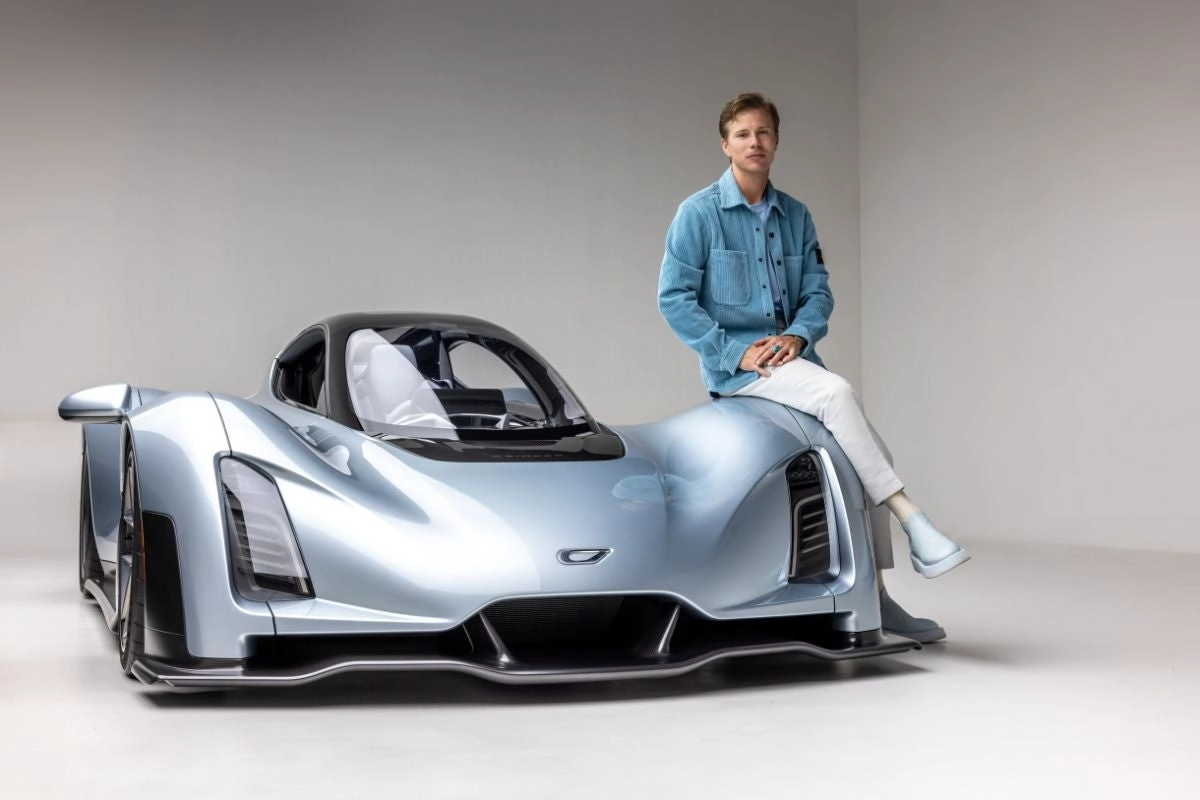
Lukas Czinger, a 31-year-old CEO of Divergent, is paving the way for innovation in the automotive industry through cutting-edge technologies like 3D printing and artificial intelligence. Divergent, founded by his father Kevin in 2014, aims to revolutionize car manufacturing. The company now produces components for renowned brands such as McLaren, Bugatti, and Aston Martin, showcasing the high quality of their products.
Lukas joined Divergent in 2016 after studying at Yale, and he has since taken on a significant leadership role as the company continues to expand its capabilities. The firm’s manufacturing process is built around the Divergent Adaptive Production System (DAPS), which utilizes additive manufacturing to create critical structural components on an industrial scale. Unlike traditional practices that mainly use 3D printing for prototypes, Divergent’s technology can produce parts capable of handling the rigorous demands found in high-performance vehicles.
In a recent factory visit, Lukas described their process, which involves using aluminum powder and lasers to create parts layer by layer, resulting in structures that are both lightweight and durable. The design phase is equally innovative; clients provide performance requirements, and Divergent’s AI-driven software optimizes the design by modifying material distribution for optimal strength and weight.
One of the standout products of Divergent’s innovation is the Czinger 21C, a hypercar that represents the pinnacle of their technology. This vehicle boasts a unique development story, transitioning from an engineering mule to a customer-ready hypercar, with production beginning in early 2024. The Czinger 21C is a fine example of what modern automotive engineering can achieve, combining bespoke design with cutting-edge manufacturing processes.
Looking ahead, Lukas envisions Divergent’s potential extending beyond supercars into industries like aerospace and defense, where scalable manufacturing capabilities are increasingly necessary. The company’s ambitions include expanding its facilities and pursuing advancements in materials that could challenge established standards, such as carbon fiber.
Through these innovations, Lukas Czinger demonstrates that the automotive sector is on the brink of a new era—an "Enlightenment" driven by technology and creativity.