Printing a new home.
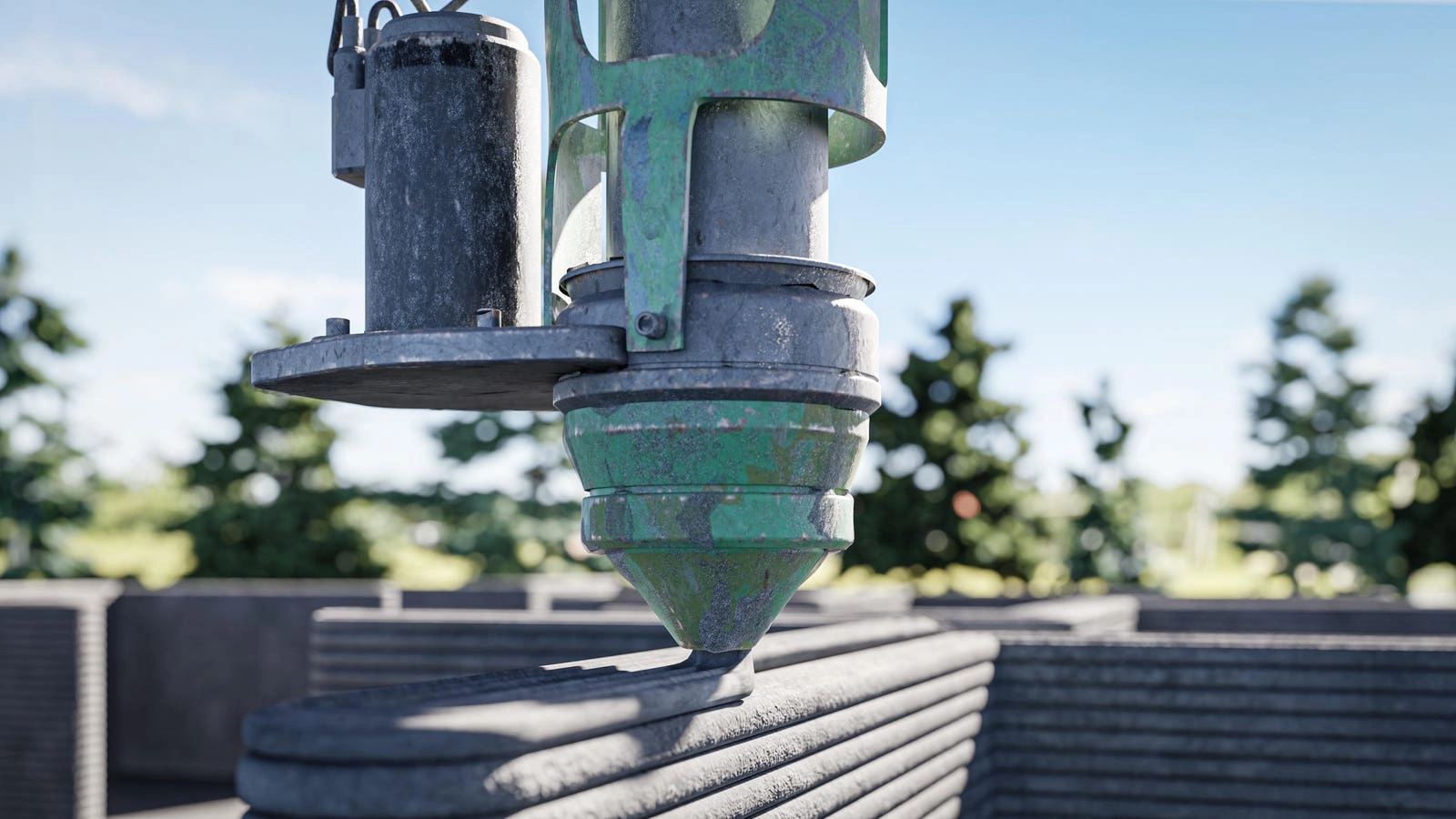
Developers in Georgetown, Texas are using robot 3D-printing technology to fight the housing shortage, creating the world’s largest 3D-printed neighborhood. Called Wolf Ranch, the community of three- and four-bedroom homes is located approximately 30 miles north of Austin. The walls of the homes are “printed” using a concrete material, called Lavacrete, applied via 46-foot wide robotic printers. Developed by Dallas-based Hillwood Communities, the 100-home collection is a joint venture between homebuilder Lennar, a Danish architecture practice known as BIG, and Texas construction firm, ICON.
ICON began printing homes in November of 2022, per USA TODAY. The homes range in size from 1,500 to 2,100 square feet, and the builder claims that 3D printed homes are faster and less expensive to build than traditional construction – requiring fewer workers and less materials. “Given the housing shortage that our country is dealing with, especially for affordably-priced homes, it’s never been more important for us to innovate – to find new methods of constructing homes,” says Lennar division president, Charlie Coleman.
A large robot – it’s bigger than a house and weighs five tons – looks like an upside down “U” with a large nozzle for dispensing materials. “Vulcan goes from the front of the home to the back for one layer,” ICON senior project manager, Conner Jenkins, tells Reuters. “So, where there were maybe five different crews coming in to build a wall system, now we have one crew and one robot,” Jenkins concludes. He says the enormous robot can create all internal and external walls in about 10 days.
According to Zillow, the average home price in Austin, Texas, is $544,638. These robot-rendered homes start at $450,000, which is about average for suburban Georgetown, where the median home price is about $446,000.
The thick walls look like grey corduroy before paint is applied. The foundation and metal roofs are created using traditional construction crews. ICON is close to finishing the walls of its 100th home in the neighborhood, according to a report from Reuters. Homeowners say the thick concrete walls keep the homes quiet, insulated, and cool in the hot Texas weather.
Homeowner Angela Hontas tells Reuters, “The concrete floors are very cool, literally. We are right next to a bypass, and you can’t hear anything.”
If there is a downside to the thick concrete walls, it’s found in the wi-fi. These homes require specific mesh networks so that signals can get through. The homes are single story, three- to four-bedrooms, with walls that resist water, mold, termites, and extreme weather. And that ability to resist extremes has already pointed ICON towards its next project.
The robot 3D printing solutions have attracted the attention of NASA – as ICON hopes to one day take this Texas tech to the moon. NASA, as part of its Artemis Moon program, has contracted with ICON to create a construction system that could build landing pads, shelters and “other structures on the lunar surface”, Reuters says.
One Community. Many Voices. Create a free account to share your thoughts.
Our community is about connecting people through open and thoughtful conversations. We want our readers to share their views and exchange ideas and facts in a safe space.
In order to do so, please follow the posting rules in our site’s Terms of Service. We’ve summarized some of those key rules below. Simply put, keep it civil.
Your post will be rejected if we notice that it seems to contain:
User accounts will be blocked if we notice or believe that users are engaged in:
So, how can you be a power user?
Thanks for reading our community guidelines. Please read the full list of posting rules found in our site’s Terms of Service.