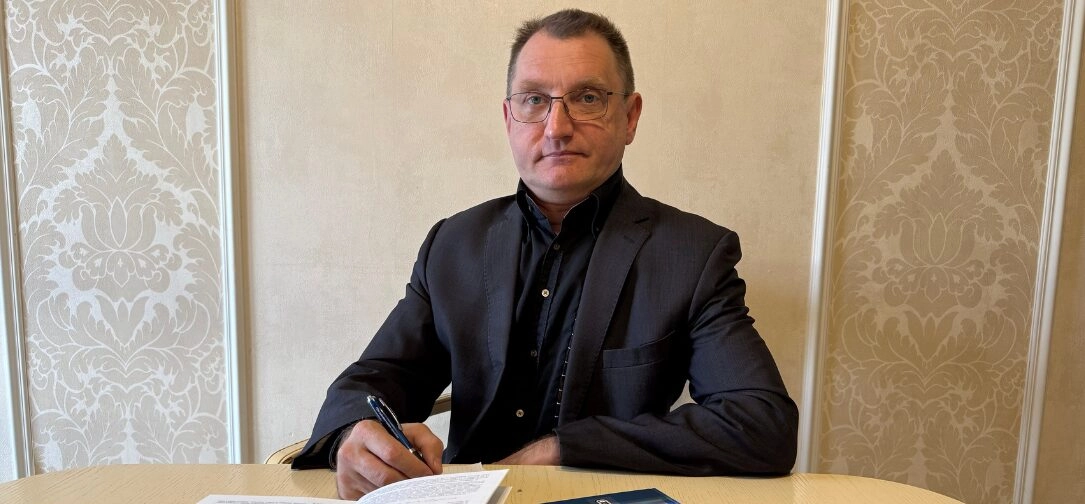
Inventor Denis Lvov, PhD, has pioneered a revolutionary microwave 3D printing technology capable of functioning in diverse environments, including outer space. As reported by Protolabs in 2024, the global 3D printing market has surged to $24.8 billion and maintains a robust growth trajectory at an annual rate of 21%. Within this dynamic field, Lvov has developed a groundbreaking technique known as Selective Microwave Melting (SMM). This technology has garnered interest from various industrial companies across Russia, the Czech Republic, and Armenia.
Lvov, whose credentials include numerous patents across Russia, the U.S., and the EU, showcased his microwave 3D printing at prominent forums such as FormNext in Frankfurt and the 3D Fab+Print conference in Moscow. In his discussions, he revealed how his early encounters with 3D printing led to a fascination with the method’s potential, especially in the realm of metal printing.
During his postgraduate research, Lvov focused on the utilization of microwave discharge for creating high-temperature plasma. His investigations first demonstrated the feasibility of using microwaves effectively as a heat source for 3D printing. He discovered that instead of direct microwave application, leveraging microwave breakdown within a controlled space could achieve necessary heating with precision. Initial experiments involved a homemade setup that successfully fused metal shavings into a bead, marking the commencement of his journey into microwave 3D printing.
Presenting his innovation at FormNext 2019, Lvov faced challenges primarily around patenting and refining his technology rather than the hardware itself, which was built on existing 3D printer frameworks. The swift completion time of just two and a half months was complemented by over a year of foundational research.
His innovation caught the attention of SLM Solutions, a major player in laser metal 3D printing. The company sought alternatives to lasers, facing challenges in scaling their technology. Lvov’s microwave-based printing offered a viable solution through its controllability.
One major claim of Lvov’s technology is its cost-effectiveness and efficiency. By eliminating the need for complex optical systems or high-powered lasers, SMM technology boasts the potential to reduce manufacturing costs significantly while enhancing productivity. The ability to control the fusion area allows for efficient printing and reduces waste.
Looking to the future, Lvov believes that his technology could play a crucial role in lunar colonization, where materials like regolith could be used for construction. Instead of transporting materials from Earth, a 3D printer powered by solar energy could utilize local resources to create necessary infrastructure.
For startups and investors seeking breakthroughs in 3D printing, Lvov advises focusing on practical applications of technology in everyday objects and industries. He emphasizes the ongoing trend of biological 3D printing as a future frontier, highlighting its potential impact in healthcare and food production.
In summary, Denis Lvov’s microwave 3D printing technology represents a notable advancement, bridging innovation in manufacturing with aspirations for space exploration while promising to reshape the industry landscape.