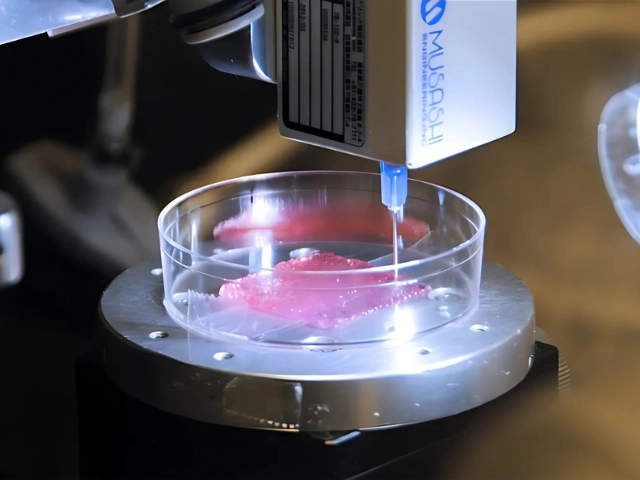
A revolutionary technique in medical technology has emerged from researchers at the California Institute of Technology, promising to redefine tissue repair through ultrasound-based 3D printing. This innovative method enables the direct printing of tissues inside the body using a special bioink that solidifies under ultrasound exposure, offering a significant advancement over traditional 3D printing methods that rely on light.
Unlike light-based printing, which is limited in depth penetration within the body, ultrasound can effectively reach deeper internal structures. This new technology has demonstrated success in experiments where tissues were printed within the stomach of rabbits and the bladders of mice.
One of the remarkable features of this ultrasound method is its capability to incorporate biosensors and medication into the 3D-printed tissues. During trials, the printed tissues included treatments like anticancer drugs, which are activated by ultrasound, showcasing potential applications in managing diseases such as cancer, organ failure, and nerve damage without the need for invasive surgical procedures.
The technique not only facilitates tissue generation directly within complex organ systems but also minimizes risks associated with traditional bioprinting methods, such as infection and scarring. The bioink utilized is designed to decompose safely after fulfilling its medicinal purpose.
While still in its infancy, the implications of this ultrasonic 3D printing technology could profoundly impact the medical field, offering quicker recovery times and reducing the invasiveness of treatments. This advancement raises the possibility of a new era in bioengineering, paving the way for novel therapeutic methods in healthcare.