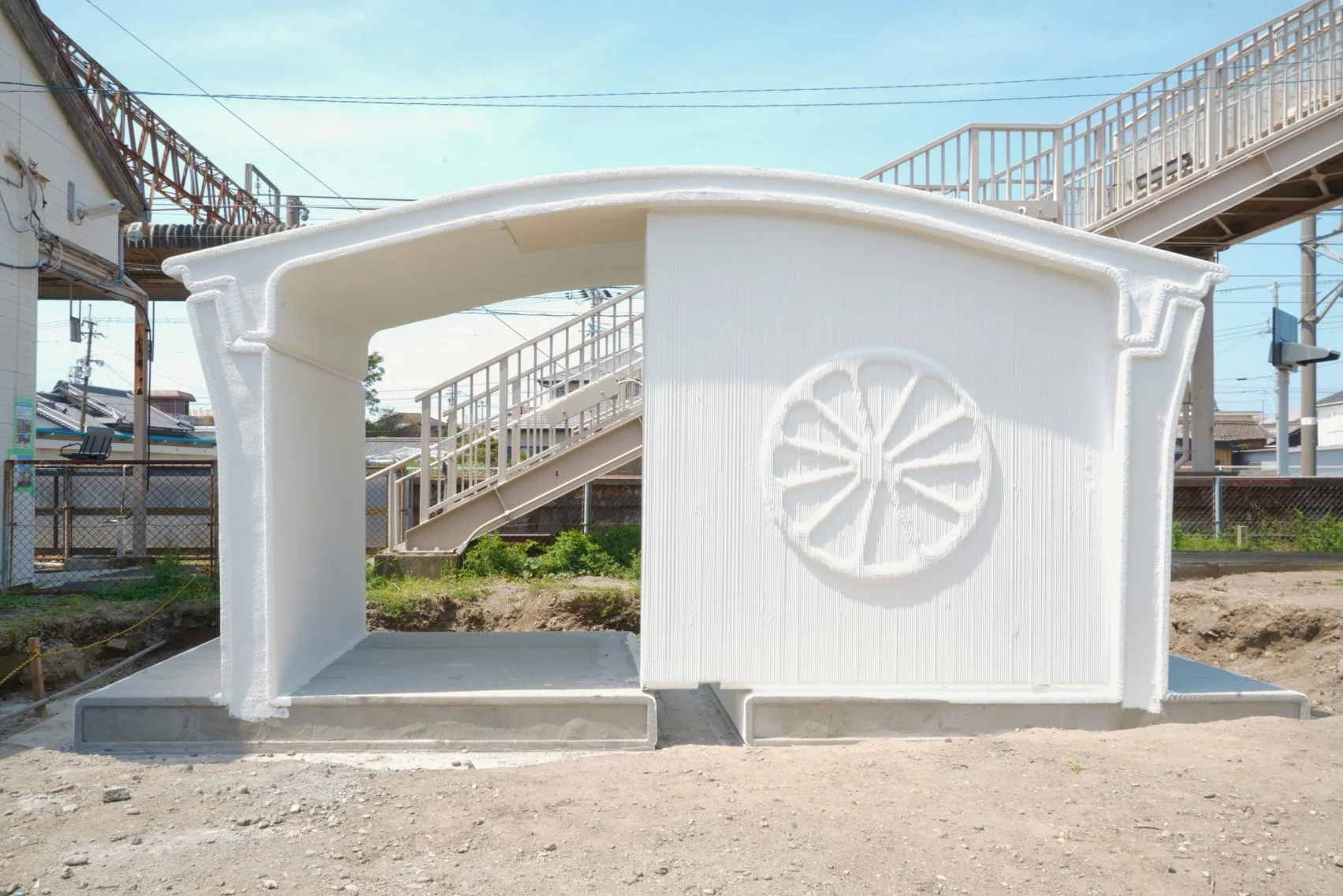
Japan has recently made strides in leveraging technology for infrastructure development by successfully 3D printing a train station in just under six hours. The project, executed in the coastal city of Arida in Wakayama Prefecture, saw a 75-year-old rural train station shelter replaced by a compact, weatherproof, and earthquake-resistant structure, now recognized as the world’s first fully 3D-printed train station.
Constructed by the West Japan Railway Company (JR West) in partnership with the architectural studio Neuob and the startup Serendix, the station exemplifies a rapid and cost-effective solution for maintaining rural train stops known as hikyō stations—often underused and in challenging locations. These stations have low ridership, making them ideal candidates for quick and efficient upgrades.
The assembly began with components printed in a factory in Kumamoto Prefecture using a special steel-reinforced mortar, which took about a week. Once ready, these parts were transported over 500 miles to the construction site. The actual assembly took place overnight, between the last train of the evening and the first train the following morning. It took only two hours to piece together the four prefabricated segments, marking a significant reduction in time compared to traditional concrete constructions that typically require one to two months.
This 2.6-meter tall structure, covering over 100 square feet, features artistic reliefs of mandarin oranges and scabbardfish, reflecting local cultural symbols. While the station’s primary structure is complete, additional work such as installing ticket machines will continue through July, at which point the station will begin operations.
This groundbreaking project not only aims to address Japan’s aging infrastructure but also sets a precedent for other countries facing similar challenges. The speed and cost-effectiveness of the 3D printing method could significantly alleviate the burden of maintaining rural infrastructure in aging societies, potentially revitalizing public amenities in underserved areas.
The implications of this success may extend beyond Japan’s borders, offering a viable model for infrastructure improvements in areas where traditional construction methods are impractical due to labor shortages or high costs.