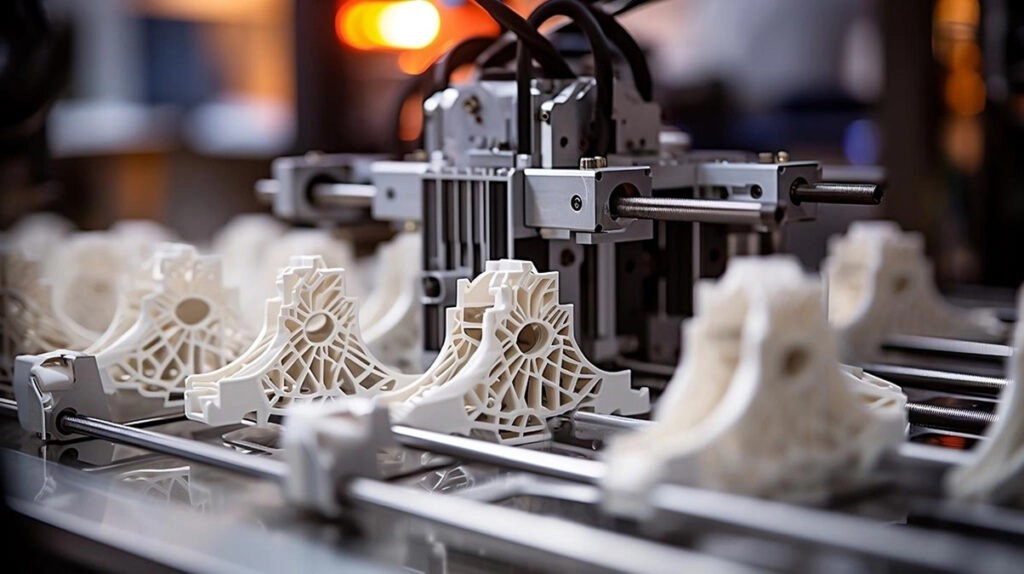
3D printing has transformed product development, providing a quick and flexible method for creating prototypes and end-use products. However, choosing the right printing technology can be daunting due to the variety of available options, each with unique benefits based on material needs, complexity, durability, and cost.
Among the prevalent 3D printing processes are Selective Laser Sintering (SLS), Fused Deposition Modeling (FDM), Stereolithography (SLA), and Multi Jet Fusion (MJF). Understanding the distinctions between these methods enables designers and businesses to make informed decisions that best suit their projects.
Key Differences Between SLS, FDM, SLA, and MJF
Fused Deposition Modeling (FDM)
FDM is a widely accessible 3D printing method that constructs parts by melting and extruding thermoplastic filament layer by layer. It is a great choice for concept models and basic prototypes due to its affordability. However, it may not achieve the precision of other methods, leading to visible layer lines and less smooth surfaces.
Stereolithography (SLA)
SLA employs a laser to cure liquid resin into solid objects, allowing for high detail and smooth surfaces. It is particularly suited for applications that require precision, such as dental models and intricate prototypes. However, the strength of SLA parts can vary, as some resins are less durable compared to those utilized in other processes.
Selective Laser Sintering (SLS)
SLS uses a laser to fuse powdered material into solid parts, resulting in robust, high-performance prototypes and end-use products. Notable for not requiring support structures, SLS can create complex internal designs. It is favored in industries such as automotive and aerospace, where strength and functionality are paramount.
More about SLS can be found at Upside Parts.
Multi Jet Fusion (MJF)
MJF, similar to SLS, offers better precision and control over the properties of the material. This method is essential when high-quality parts are needed, balancing strength and detail, making it ideal for functional prototyping and consumer product development.
Choosing the Right 3D Printing Method
The selection of 3D printing technology hinges on several key aspects:
Strength and Durability Requirements
For functional parts needing resilience, SLS and MJF are typically the best options due to their robust output. FDM also produces solid parts, although visible layer lines may affect durability. Conversely, SLA parts, while detailed, may be less durable.
Complexity of the Design
SLS and MJF excel at producing intricate designs and internal features without support structures. SLA allows for fine detail too, yet may fall short for large, complex parts. FDM, while effective for straightforward geometries, is not ideal for high precision.
Surface Finish and Aesthetic Quality
If appearance ranks high on your priorities, SLA stands out for delivering the smoothest finish. MJF is also valuable for creating visually appealing components. FDM’s more apparent layer lines might require post-processing, while SLS outputs can be rough but can be improved with finishes.
Budget and Production Volume
For basic prototypes or extensive prints that don’t demand high detail, FDM is the most cost-effective option. In contrast, SLS and MJF are more economical for high-performance components, whereas SLA can result in higher costs per part, especially for larger items.
Turnaround Time and Manufacturing Speed
FDM is the fastest option for quick prototypes, whereas SLA, SLS, and MJF are slower but yield superior quality. For short production runs requiring consistent quality, MJF strikes a good balance between speed and durability.
Conclusion
Each 3D printing technology has its strengths that suit different applications. Understanding the differences among SLS, FDM, SLA, and MJF helps in selecting the most appropriate method for your project needs. For businesses seeking expert guidance, collaborating with an experienced 3D printing provider is advisable to streamline the process and enhance project outcomes, ensuring efficiency and success in product development.