ROCK ISLAND ARSENAL, Ill.—The U.S. Army’s Rock Island Arsenal-Joint Manufacturing and Technology Center (RIA-JMTC) is harnessing the power of additive manufacturing to transform machine repairs, cut costs, and boost military readiness. This initiative highlights the creativity and dedication present in the Department of Defense and the U.S. Army’s organic industrial base.
The process begins with reverse engineering a faulty part. Edward Flinn, director of the Advanced Manufacturing Center of Excellence (AM CoE) at RIA-JMTC, explains, “We then printed the part, and fortunately minimal machining was required, so we were able to get the equipment operational soon after the prints were complete.”
With a skilled workforce, the AM CoE is producing temporary replacement parts for crucial equipment, which greatly reduces downtime and extends the life of older machinery. RIA-JMTC Logistics Director John Shappell noted that some machines are as old as the 1950s, performing tasks that newer technologies struggle with due to different specifications and tolerances.
The additive manufacturing initiative builds on the success of the Battle-Damaged Repair and Fabrication program created in partnership with the Tank-automotive and Armaments Command. This program supports rapid on-demand 3D printing of parts needed by Army units in the field, thus improving readiness and operational capability.
"When you need a small quantity quickly, that’s when additive manufacturing comes into play,” said Robert Branch, an AM CoE engineer. Traditional manufacturing methods are better suited for large-scale production, making the AM CoE a vital resource for urgent small batch needs.
The adoption of 3D printing reduces costs by minimizing dependence on expensive conventional methods, especially for minor production runs. RIA-JMTC sets the pace for innovation in military manufacturing; while some 3D printed parts may cost more, the speed and versatility they offer are essential.
"Customers understand that readiness solutions might come with a premium, and some are willing to invest in that assurance," said Randl Besse, project manager at AM CoE. The center can deliver parts in days instead of weeks, highlighting the value of this investment during critical times.
This focus on innovation allows RIA-JMTC to support not only existing systems but also align with the Army’s modernization initiatives. The work being done at the AM CoE exemplifies the caliber of talent within the workforce, ensuring that the facility is ready to respond to large-scale combat operations.
Effective design improvements are also part of the AM CoE’s goals. For instance, a water pump part that traditionally took four to six weeks to procure can now be 3D printed, machined, and tested in less than a week, significantly enhancing operational readiness.
"In this factory, we’re competing with private industry to secure parts necessary for production and military readiness," Shappell remarked.
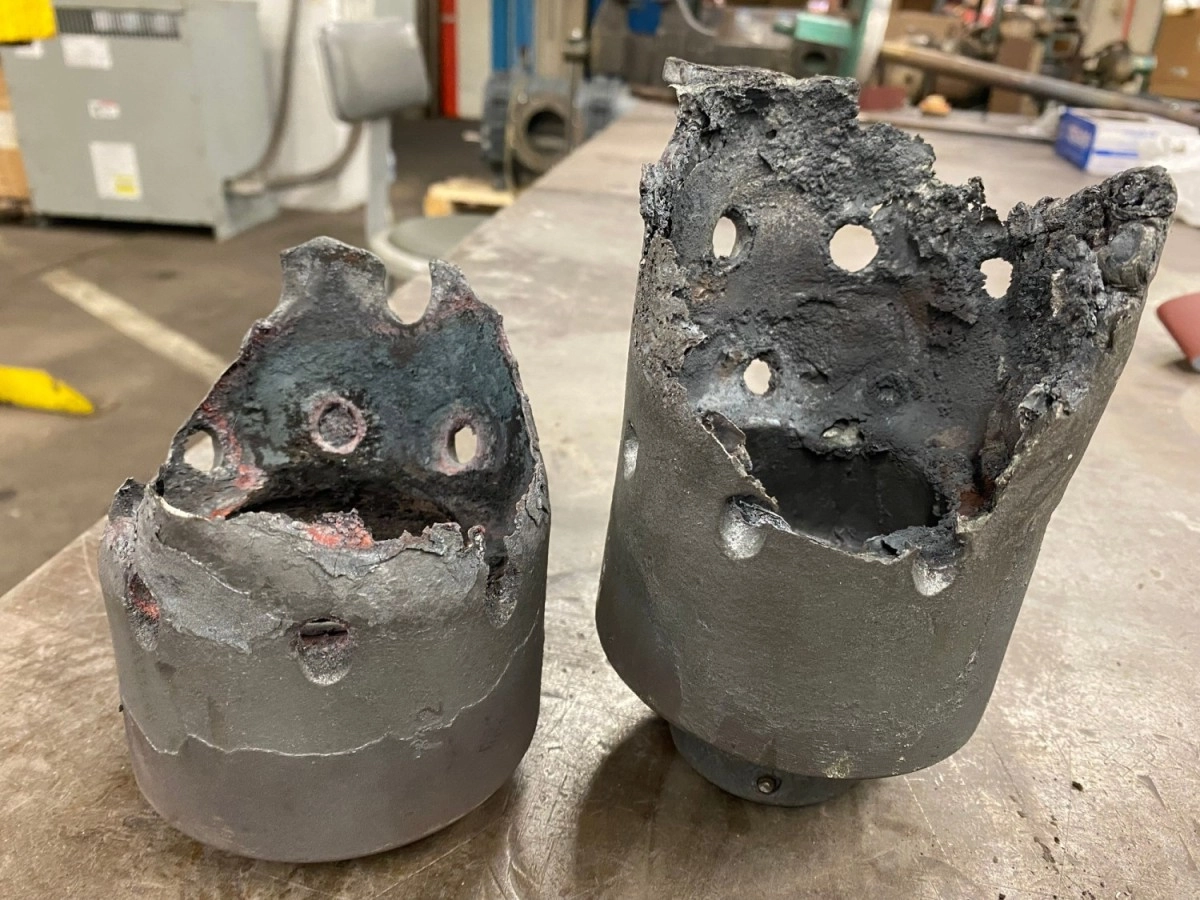
This collaborative spirit extends to redesigning components for better performance. The AM CoE improved a burner cone by printing it as a single robust piece instead of the original two-part design, eliminating many failure points.
Branch pointed out, “The material performance of printed items is very close to that of forged or cast materials." This trend indicates a significant advancement in 3D printing technology’s role in military operations, with RIA-JMTC leading the charge in enhancing readiness and operational capabilities for the Army.
RELATED STORIES
- Army inaugurates Universal Artillery Projectile Lines facility
- Army announces Future Long Range Assault Aircraft contract award
- Army officer part of newly resumed cooperation for International Space Station
- U.S. Army STAND-TO! | Army Organic Industrial Base Modernization Implementation Plan
- Army Announces 2017 Superior Supplier Incentive Program List
- Department of the Army announces 16th Combat Aviation Brigade, 7th Infantry Division deployment
- Department of the Army announces 1st Brigade Combat Team, 1st Armored Division deployment
- TWO BRIGADES FROM 4TH INFANTRY DIVISION TO DEPLOY TO AFGHANISTAN