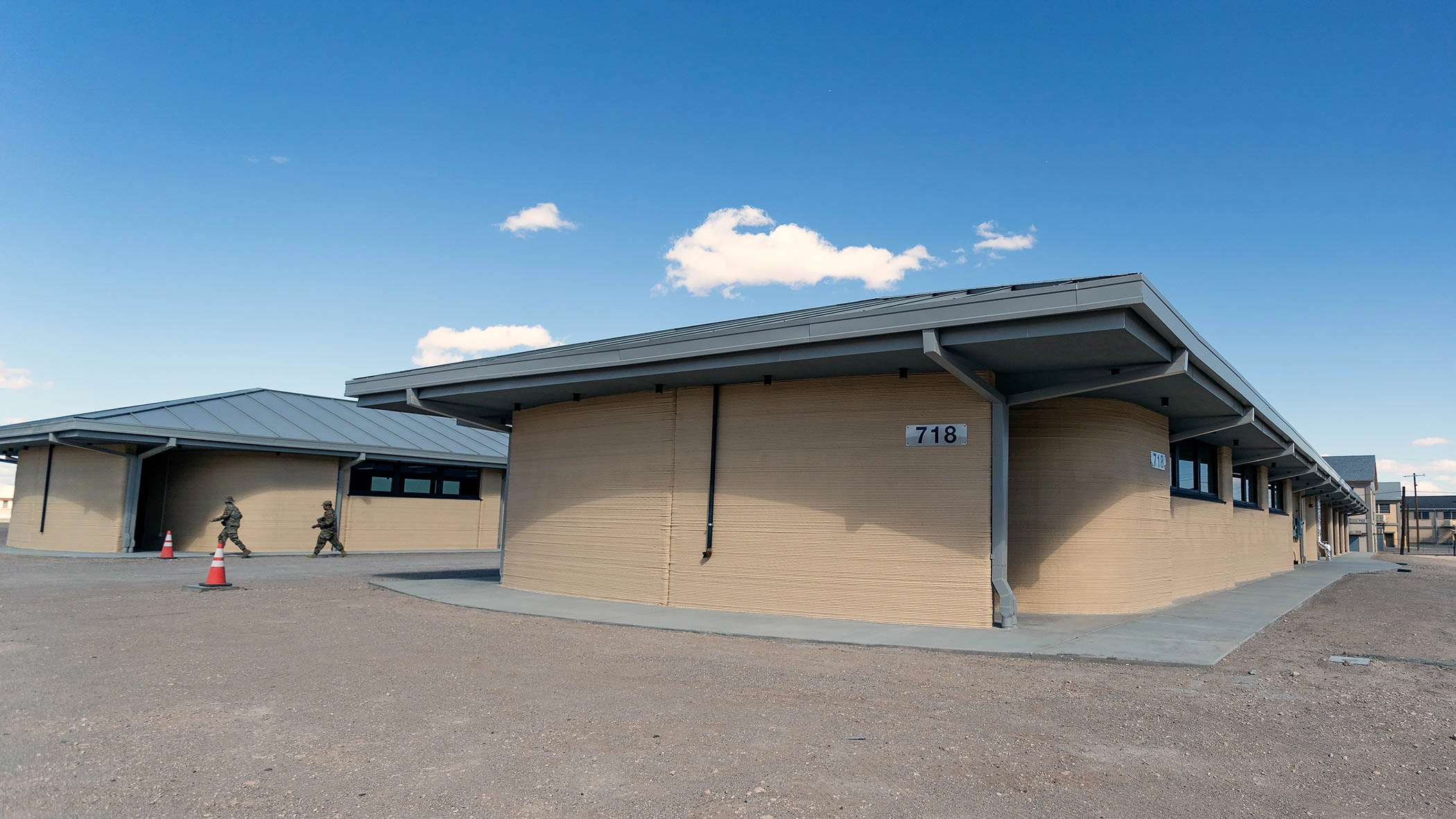
Soldiers at Fort Bliss, Texas, will soon reside in newly constructed 3D-printed barracks, a forward-thinking approach to military housing. These barracks, created using a five-ton 3D printer and a specialized concrete material called "lavacrete," are the largest of their kind in the U.S. Each building covers approximately 5,000 square feet and is capable of accommodating 56 soldiers.
Three of these structures were officially opened at the end of January, with two located in the Pershing Heights area and one at Camp McGregor, situated within the base’s training complex in New Mexico. Fort Bliss hosts around 70,000 service members for training each year, including Army Reserve and National Guard units.
The first unit to occupy the new Pershing Heights barracks will be the 382nd Military Police Detachment, an Army Reserve unit from Massachusetts, arriving for an installation mission. Unlike traditional construction methods, which can be time-consuming and costly, 3D printing allows for quicker assembly and customizable design, potentially reducing waste and labor expenses.
The construction utilized advanced computer-aided design software, which sliced the designs into horizontal layers that were then printed and rejoined. The Vulcan printer used for this project was developed by ICON, a Texas-based company focused on additive manufacturing. Lavacrete is designed to adapt to varying environmental conditions and is expected to outperform standard building materials.
During the ribbon-cutting ceremony, Lt. Gen. David Wilson emphasized that 3D printing can deliver high-quality structures at a lower cost, transforming how military facilities are created. However, the exact cost of these barracks remains undisclosed, with inquiries redirected to ICON, who did not comment on the matter.
This initiative reflects the Pentagon’s growing interest in employing modern construction methods to enhance military housing. In a similar spirit, Fort McCoy in Wisconsin has adopted cost-effective solutions by relocating World War II-era barracks.
Moreover, the Department of Defense has been investing in 3D printing technology to produce spare parts for military equipment faster and more affordably, showcasing its versatility beyond just housing projects. The Pentagon is actively considering 3D printing as an expedient solution for future construction needs, particularly in deployed locations.
Overall, the introduction of these 3D-printed barracks represents a significant advancement in military infrastructure, illustrating a commitment to modernization and efficiency in service of the troops.