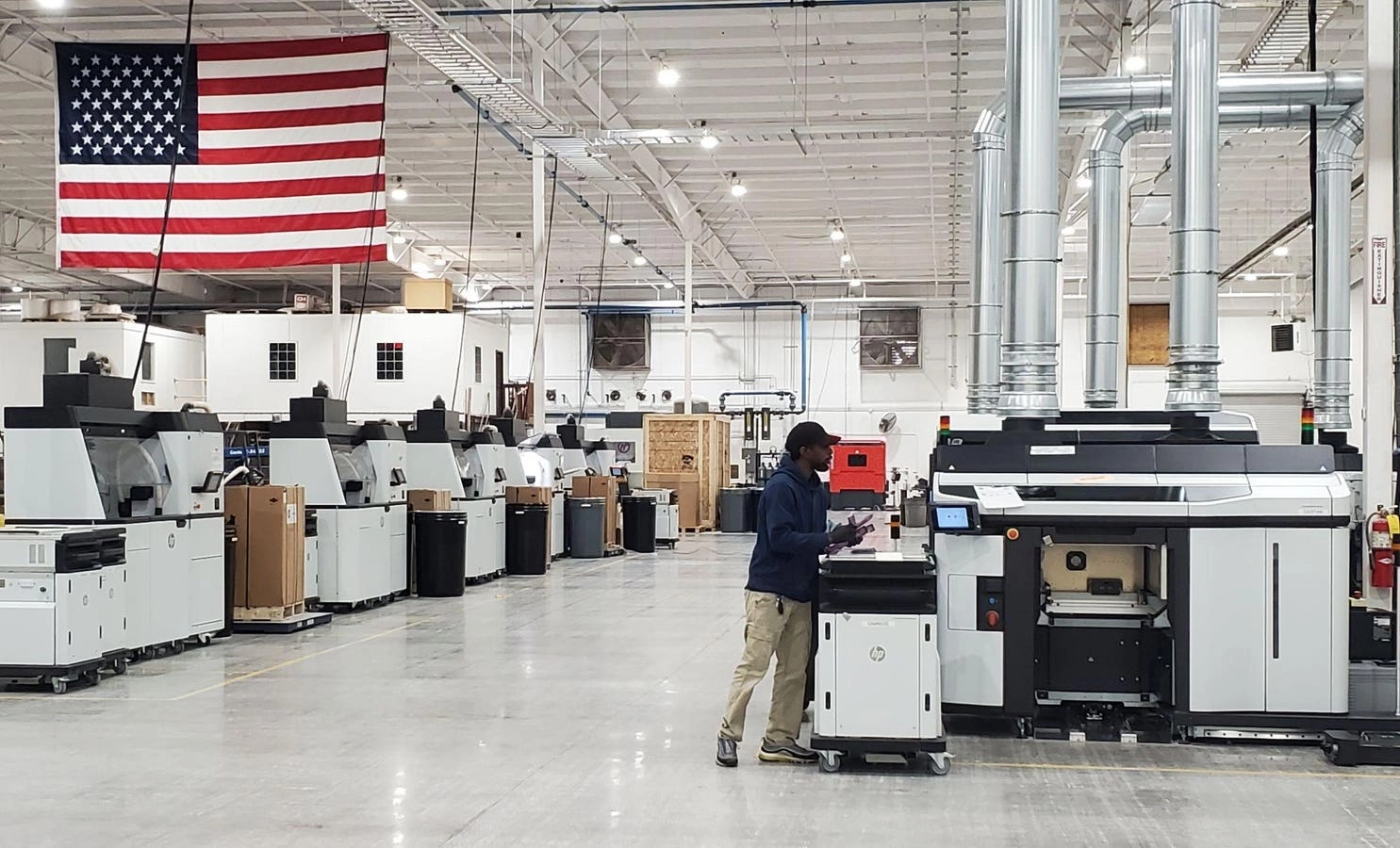
American contract manufacturers, particularly those focused on 3D printing, are preparing for an increase in domestic production as the U.S. aims to reclaim its manufacturing capabilities. Phil DeSimone, CEO of Carbon, highlights how 3D printing facilities can be established relatively quickly, making them vital in reshoring efforts. For instance, Adidas utilizes Carbon 3D printers in Asia for its 4DFWD running shoes, yet challenges remain due to reliance on overseas supply chains for other components.
Despite the hurdles of reshoring, there is significant potential for additive manufacturing to alleviate these issues, especially in essential areas like mold tooling and spare parts—fields where traditional manufacturing may fall short in flexibility and responsiveness. Yoav Zeif, CEO of Stratasys, emphasizes that a more protectionist trade environment can actually benefit additive manufacturing by facilitating local production and reducing dependency on global supply chains.
Distributed manufacturing, as echoed by Alex Monino from HP, allows parts to be produced closer to their point of use, which can drastically cut shipping costs and mitigate risks associated with long supply chains. Companies like Vestas have successfully implemented in-house 3D printing for critical components across their global facilities, showcasing the practicality of local production.
Furthermore, tariffs and trade policies are serving as catalysts for additive manufacturing. Glynn Fletcher from EOS North America notes that an American-first approach will likely draw sensitive manufacturing sectors, such as defense, back to U.S. soil. The defense industry is heavily investing in advanced manufacturing technologies to reduce overseas reliance, particularly following significant developments in 3D printing capabilities with companies like Nikon Advanced Manufacturing expanding their U.S. operations.
As traditional manufacturers may hesitate to fully embrace additive manufacturing, a burgeoning network of 3D contract manufacturers is poised to fill the gaps. This sector saw a remarkable 14% growth year-over-year, reaching a global market value of $1.9 billion in Q3 2024. DeSimone believes that substantial tariffs could force many companies to pursue domestic facilities, ultimately fostering growth within the additive manufacturing industry.
This shift in the manufacturing landscape presents a unique opportunity for the 3D printing sector to redefine production processes while supporting the broader goal of revitalizing American manufacturing.