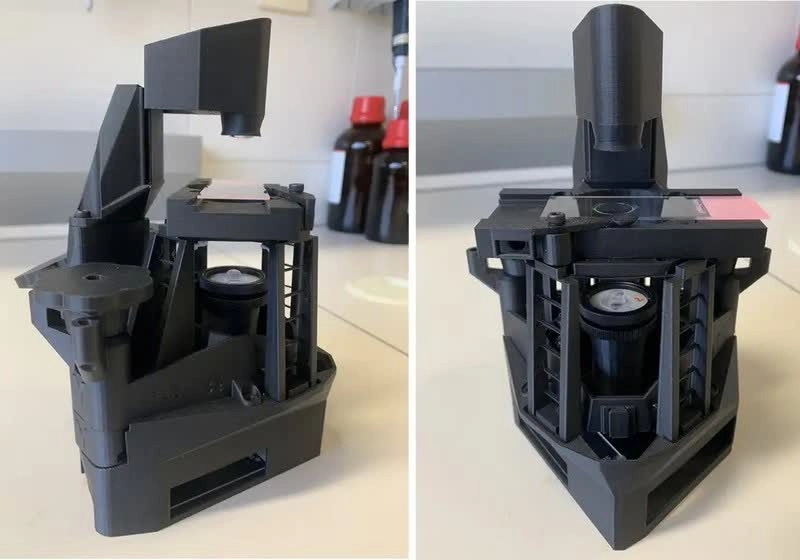
Researchers at the University of Strathclyde in Glasgow have developed an innovative optical microscope using 3D printing technology, costing just $60. This microscope, created from an open-source design by OpenFlexure, is aimed at researchers with tight budgets. The breakthrough not only showcases the capabilities of 3D printing but also provides a practical solution for scientific applications.
The team leveraged a Raspberry Pi to manage the microscope’s functions, enhancing it with a standard camera and light source. This design claims to be the world’s first fully 3D-printed microscope specifically for histological imaging. Assembling all parts, the microscope weighs approximately 3 kg (or 6.6 lbs) and takes only three hours to produce, with a material cost of around £50 (about $60).
The microscope features plastic lenses created using a Mars 3 Pro 3D printer and photopolymerizing resin. These lenses are designed to meet the specifications of common glass lenses while significantly reducing costs. In testing, the microscope was able to capture detailed images from biological samples, including a blood smear and mouse kidney tissue, achieving a spatial resolution of approximately 5 micrometers. This performance marks a substantial improvement over previous DIY Raspberry Pi microscopes, which lacked the capability to visualize such fine details.
Over the years, thousands of devices following OpenFlexture’s designs have been built in over 50 countries, including remote locations like Antarctica. However, the need for costly custom glass lenses has limited accessibility, often disqualifying researchers from utilizing these microscopes.
The design from the University of Strathclyde addresses this issue, potentially allowing broader access to advanced microscopy tools for those who cannot afford traditional alternatives. The researchers envision future iterations that would include higher-powered lenses with various apertures and magnifications, expanding the possibilities for scientific exploration.