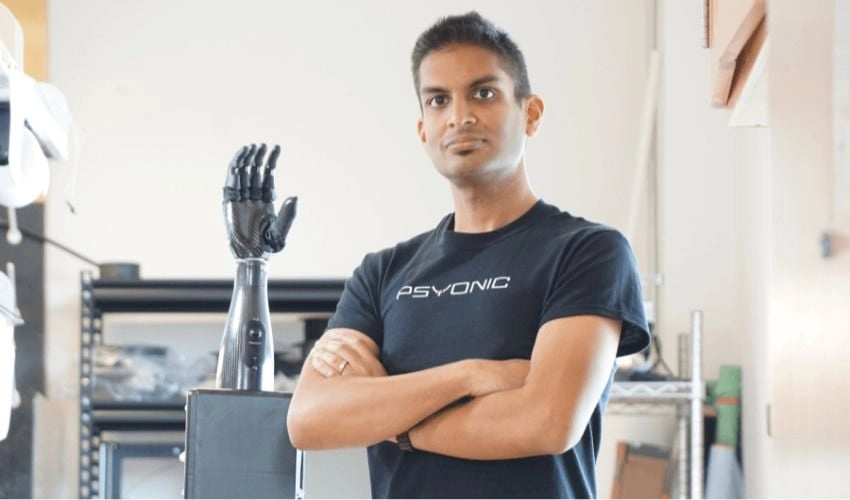
Traumatic limb amputation affects over 50 million people worldwide. While many individuals opt for prostheses, the integration of these devices into daily life often poses significant physical and emotional challenges. Traditional prostheses can be basic, expensive, and fragile, with only about 10% of patients able to afford advanced prosthetic arms. However, recent advancements in technology provide renewed hope for improved prosthetic solutions.
PSYONIC, founded by Dr. Aadeel Akhtar, is at the forefront of this innovation. The company’s mission is to create accessible, high-quality robotic limbs. Utilizing cutting-edge 3D printing technology, PSYONIC has developed the Ability Hand, a bionic hand that aims to revolutionize the prosthetics industry. In an interview, Akhtar explains how 3D printing is enhancing autonomy and the quality of life for amputees.
PSYONIC has been dedicated to making advanced prosthetic technology accessible since its inception. Their journey started with free 3D printing of hand models, which has evolved into nine iterations of their flagship product. They identified common issues with existing high-end prostheses, such as their tendency to break due to rigid materials. To address this, PSYONIC incorporated more flexible materials like silicone and rubber alongside advanced manufacturing processes, including SLA and SLS printing.
The idea for PSYONIC was born in 2015 when Akhtar, inspired by a visit to Pakistan, witnessed a girl using a tree branch as a crutch after losing a leg. This experience ignited his passion to create affordable bionic limbs. While pursuing his PhD at the University of Illinois, he tested a prototype of the Ability Hand, which allowed a patient to grasp objects for the first time in decades. This powerful moment motivated Akhtar to move beyond academia and commercialize the technology, officially founding PSYONIC.
PSYONIC employs various additive manufacturing methods, including FDM, SLA, and SLS, to construct the Ability Hand. This includes producing structural components and integrating advanced materials for improved durability. The production process involves assembling motors, creating fingers with internal structures, and ensuring waterproofing for everyday use. Once completed, the bionic hand is customized to fit the patient’s residual limb, allowing for intuitive control via muscle sensors.
Looking to the future, PSYONIC aims to enhance its devices further by integrating them with the human skeletal system and enabling direct neural control of finger movements. They aspire to develop an assistive leg capable of supporting activities like triathlons in the next five years. Interestingly, PSYONIC’s bionic hand technology is also being adapted for use in robotics and is being considered for applications in space by NASA and Meta, highlighting the versatile potential of their innovative design.
For more information about PSYONIC and their cutting-edge technology, check out their official website.