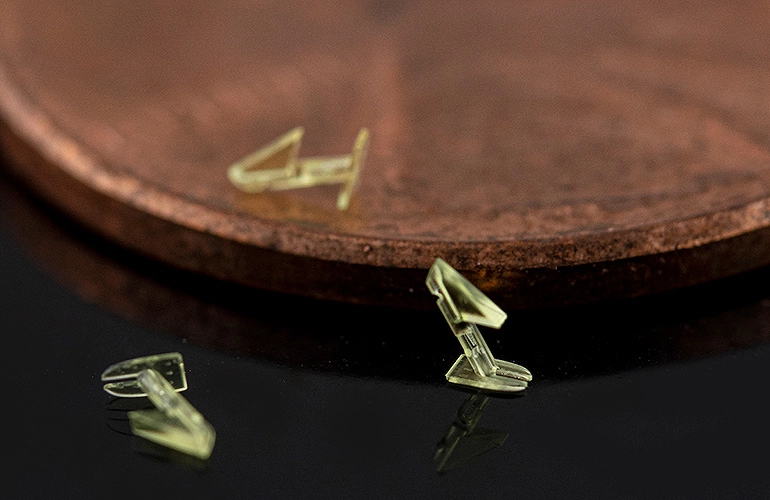
High precision micro 3D printing is paving the way for significant advancements in medical technology, reshaping how patient care is delivered. The rapid acceleration of innovation in 3D printing has opened new avenues for healthcare and biopharmaceutical industries, enabling the creation of tailored medical solutions, ranging from smart wearables to personalized devices like micro stents for glaucoma treatment. This trend of miniaturization makes micro 3D printing a critical solution for producing ultra-precise medical components.
1. Specialized Materials and Production Runs
The demand for highly specialized materials that are biocompatible and capable of withstanding various conditions is increasing in medical technologies. This is crucial for applications in precision medicine and disease modeling. The adaptability of 3D printing allows for the use of diverse materials, making it a viable option for prototyping and producing small quantities of medical devices. As healthcare focuses more on customization and the use of single-use technologies, 3D printing will likely collaborate closely with material scientists to develop tailored materials that meet specific clinical needs.
2. Innovations in Niche Medical Areas
In recent years, new entrants in the medical device market have begun concentrating on specialized areas that address unique challenges within the medtech industry. Innovations like 3D-printed arthroscope tips designed by companies such as Pristine Surgical are helping to enhance endoscopic procedures with high-resolution imaging. Additionally, microfluidic devices, which replicate human biology for drug testing, are revolutionizing pharmaceutical research by providing more accurate drug responses in testing phases. Businesses leveraging 3D printing technology will focus on addressing production challenges, skipping costly in vivo studies to accelerate life sciences research.
3. Continued Miniaturization of Medtech
Miniaturization is critical for therapeutic delivery and other medical components, driving the appeal of micro 3D printing. For example, researchers have utilized 3D printing technology to create bio-inspired intratumoral catheters specifically designed for precise medication delivery to liver tumors. These catheters are engineered with intricate features that traditional manufacturing could not achieve, resulting in significantly enhanced drug concentrations at targeted sites—suggesting robust applications for targeted cancer therapies.
As we step into a new year, the convergence of 3D printing with medical innovation promises to drive the creation of ground-breaking technologies. The focus is shifting towards end-use applications, particularly in dental and other medical environments, to further advance healthcare solutions across various sectors.