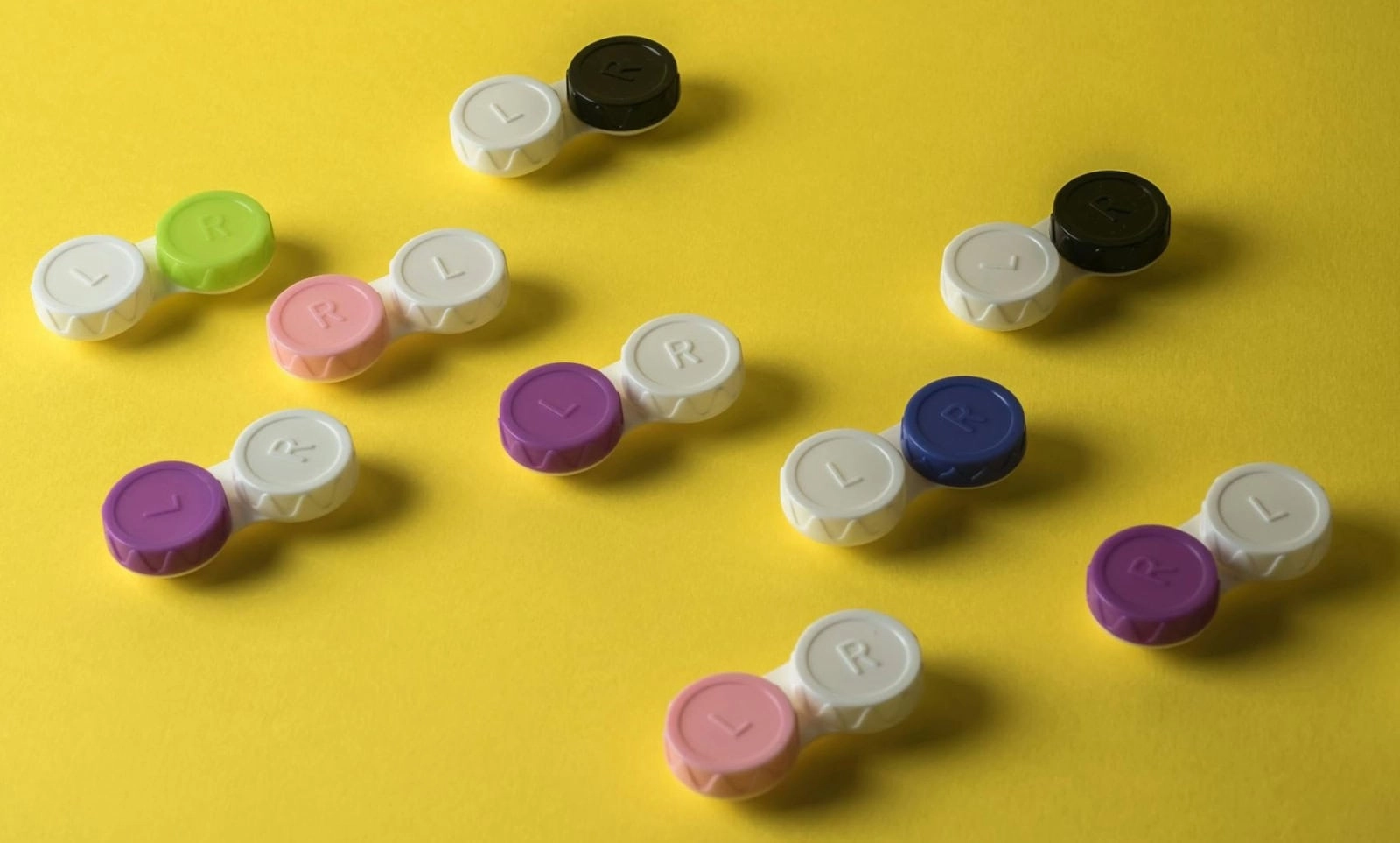
3D-printed contact lenses represent the wave of the future.
Imagine visiting the eye doctor, undergoing an examination of your eyesight, and then watching as your customized contact lenses are created immediately at the push of a button. This scenario could soon become everyday reality.
The concept of contact lenses was first theorized by Leonardo da Vinci in 1508, but they weren’t practically developed until the 1930s. Despite this, their popularity has been limited.
Globally, while three billion individuals use spectacles, only 150 million choose contact lenses, largely due to cost and comfort issues.
Contact lenses are typically much more costly than eyeglasses, particularly because 90 percent of users now opt for disposable types.
Additionally, many individuals discover they are unable to use them due to the unsuitable shape of their eyes.
According to Edan Kenig, CEO of the Israeli startup Lensy, eyes vary greatly in shape and size, similar to feet.
However, most contact lenses available are designed as “one-size-fits-all,” excluding the optical zone in the center. While this standard size may suffice for about 70% of the global population, the remaining 30% unfortunately struggle to find a good fit.
Major players in the optical industry often use identical molds to produce vast quantities of lenses, resulting in some that don’t perfectly fit every individual due to minor variations in eye shapes and sizes.
Kenig believes his innovative technology will address both affordability and comfort issues, with his lenses possibly hitting the market in about four years.
“I would really appreciate the ability to wear contact lenses throughout the day,” mentions Kenig, who has a particularly high prescription of minus-11.
“Currently, I can only use them for sports like Brazilian Jiu-Jitsu and only for a few hours, as they are not comfortable for extended wear,” he explains.
He initially trained as a biophysicist before transitioning into roles as an engineer and entrepreneur, where he focused on transforming concepts into tangible products.
Recognizing the potential of a burgeoning technology known as resin 3D-printing, which represents a more advanced version of traditional 3D printing, he became interested. This method utilizes UV light to solidify or “cure” resin, instead of extruding material through a nozzle in a layer-by-layer formation.
Kenig and his team, operating from Rehovot in central Israel, have modified a type of material used for contact lenses and innovated a technique to resin 3D-print this material.
They have successfully printed a contact lens, claiming to be pioneers in this achievement. However, they acknowledge the need for further refinement of the product before it can be tested in a human eye.
Lensy is an early-stage startup established in early 2022 with support from the Israel Innovation Authority. The company is not yet backed by external investors.
According to Kenig, large corporations are also exploring the fabrication of printed lenses. However, they are focusing on developing large, expensive printing equipment unlike the more compact desktop version that he is designing.
For the majority of people with standard vision, mass-produced lenses will likely continue to be the optimal choice. Nonetheless, for the approximately 30% of individuals requiring customized solutions, specialized lenses will represent a significant breakthrough.
“Those further from the typical fit experience more issues, including those with severe astigmatism, high myopia, or unusually shaped eyes that deviate from being round and spherical,” he explained.
“The optometrist will then have the opportunity to make a custom solution so the patient will have an affordable, comfortable fit that’s tailored to their needs.”
The machine will be available on a lease basis, using capsules that will cost the optometrist $50 per eye.
The lenses will be reusable, although it’s possible that the technology will evolve to produce disposables.
“Contact lenses aren’t a new solution, yet they have many disadvantages that haven’t been resolved by better materials or better designs,” Kenig says.
Around 20% of users discontinue their use annually, according to Kenig, leaving the market relatively unchanged. The stagnation is primarily attributed to the high costs—approximately $4 daily—and a lack of variety in sizes available.
“Imagine going to buy shoes, but every pair is a size nine [42 in Europe],” Kenig explains. “It works if that’s your size; however, for those who are a size eight or a size eleven, finding a good fit becomes a challenge, if not impossible.”
Kenig points out that acquiring contact lenses is a demanding and time-intensive process, requiring significant dedication from the consumer. Any slight error in fitting can require the optician to reorder a completely new set of lenses.
“When there are issues with standardized contact lenses, opticians often suggest switching to traditional glasses since they lack the resources to customize lenses specifically for an individual,” says Kenig.
In the future, Kenig mentions that Lensy might develop contact lenses using existing technology which could slow the progression of myopia in growing children.
Kenig also suggests that these lenses could be equipped with time-release drugs to eliminate the necessity for distressing eye injections, and could integrate smart features like sensors and cameras.
For more information, click here.