You might anticipate that large corporations, with substantial budgets and engineering resources, would lead the adoption of new technologies like additive manufacturing. However, Andrea Gorlezza, CEO of MadeInAdd, explains that it’s actually startups that are making the fastest strides. They are not burdened by conventional engineering practices, allowing them to adopt 3D printing more readily.
Based in Milan, MadeInAdd operates as an AM platform that assists manufacturers from design to finished product, utilizing over 50 additive technologies. Gorlezza, who took the helm in early 2025, has a background in traditional manufacturing spanning 25 years across various sectors including automotive and oil and gas. His experience helps him understand why legacy manufacturers struggle to adopt AM technologies.
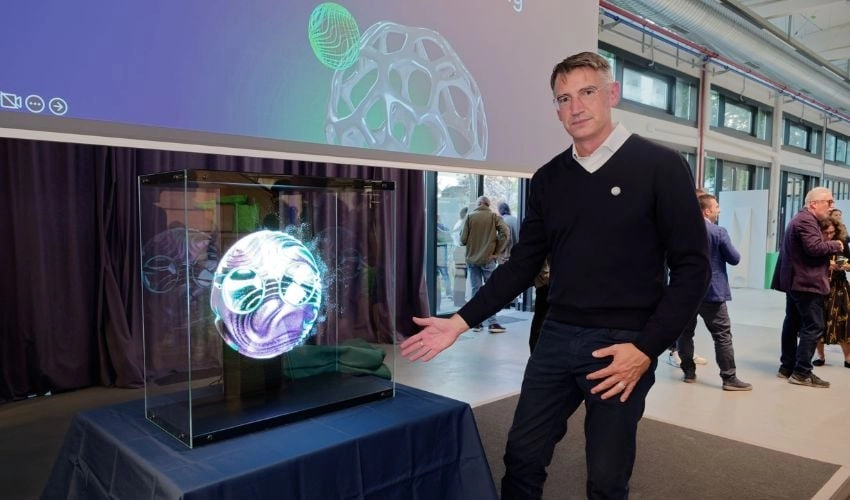
During Milan Design Week, MadeInAdd showcased the connection between design and additive manufacturing. Gorlezza highlighted that Italy’s craftsmanship aligns seamlessly with AM’s capabilities for custom product creation. The country, recognized for its design in fashion and luxury industries, can leverage AM to enhance its traditional crafts.
Despite the technology not being the issue, convincing engineers of its viability remains a challenge. Gorlezza emphasizes that many engineers still question the technical equivalency of AM products compared to those made with traditional methods. This skepticism is amplified by the rapid advancements in 3D printing, making it difficult even for those who were updated on its potential to keep pace.
Gorlezza argues that the term "additive manufacturing" is limiting because its true value emerges when integrated into the initial design phase rather than viewed merely as a production method. This holistic approach is central to MadeInAdd’s business model, where they engage with clients from the design stage through to delivery. They advocate for considering design choices, such as topology optimization and aesthetic flexibility, which only become practical when AM is factored into the creation process.
Navigating the AM landscape can be daunting due to the myriad of choices in materials and technologies. MadeInAdd addresses this complexity through in-house engineering expertise and an AI agent named Maddie, which assists users in identifying suitable options based on their project’s specific technical and economic needs. Maddie can transform a 2D image into a 3D model and suggest manufacturing methods, but for complex requirements, human engineers step in to provide tailored solutions.
Gorlezza believes that the knowledge gap surrounding AM is temporary and can bridge with proper education and evidence showing its capabilities. While startups quickly recognize the technology’s advantages, larger industrial firms need to catch up and decide if they are ready to embrace these innovations. For more information about MadeInAdd, visit their website HERE.
Are you seeing big companies lagging in their adoption of additive manufacturing? Share your thoughts on our LinkedIn or Facebook pages!