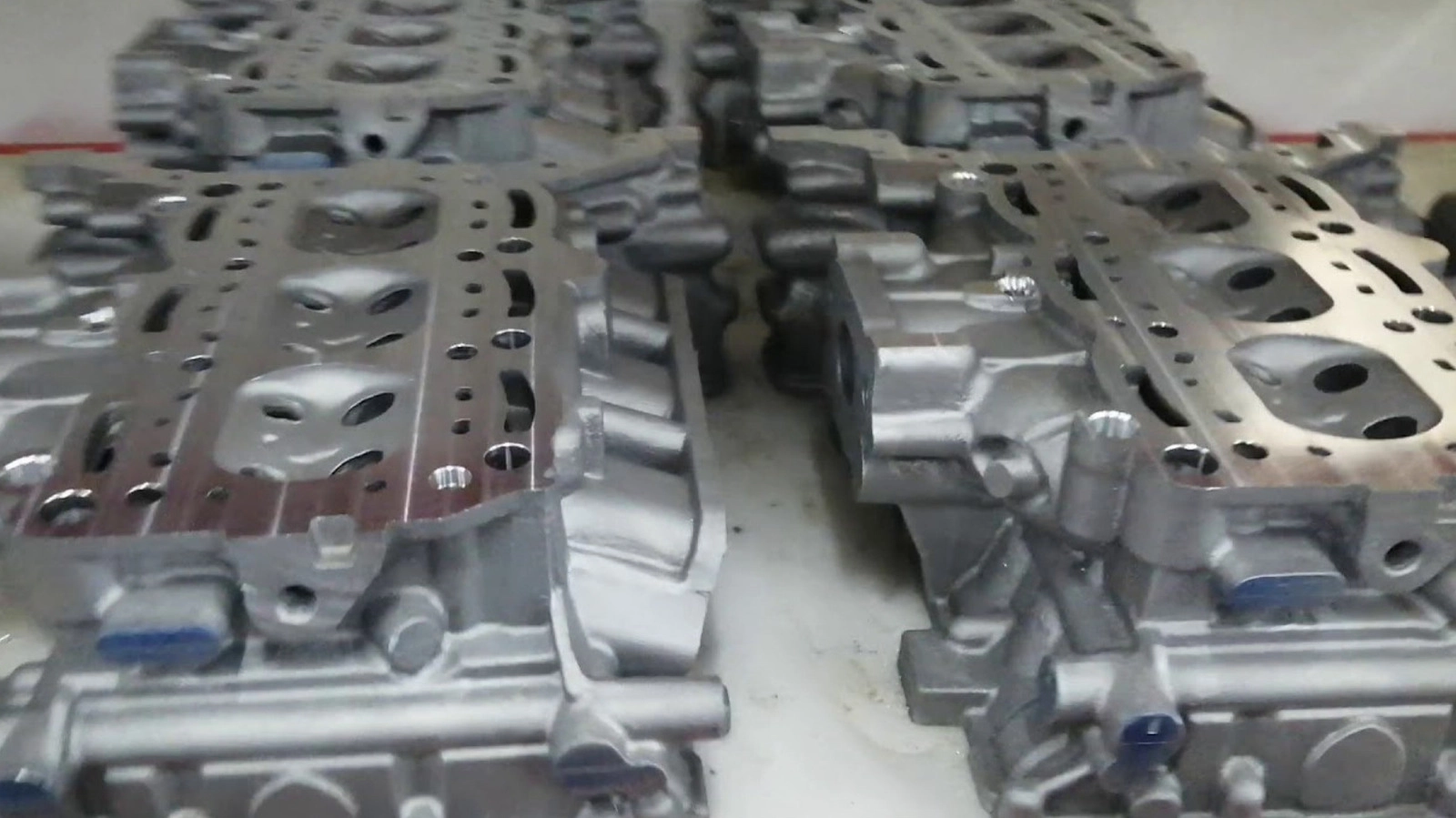
3D printing is gaining traction in various industries, including automotive, heralding a new era for component manufacturing. Among the intriguing applications is the creation of metal cylinder heads, a more complex project than printing accessories.
The longevity of a 3D-printed cylinder head remains uncertain as it doesn’t possess a defined lifespan; it fails similarly to factory-made counterparts due to the continuous heating and cooling cycles it undergoes. The durability of a cylinder head can therefore be measured in heat cycles rather than mileage, making its exact lifespan difficult to forecast. This phenomenon is referred to as Thermo-mechanical fatigue (TMF), where the material sustains damage from repeated thermal expansion and contraction.
3D Printing Limitations in Engine Design
Typically, metal is the material of choice for 3D-printed cylinder heads; however, both polymers and metals are frequently utilized to manufacture parts not subjected to the extreme engine temperatures. In the automotive sector, 3D printing is applied to various components like air ducts, brackets, and fixtures, where rapid production is more critical than enduring high heat.
Nevertheless, 3D printing has a significant role in engine development. If you had approximately $20,000 and a 3D printer, constructing your own high-performance vehicle is a reality, as illustrated by a project to build a Lamborghini. Manufacturers are increasingly producing complex components such as pistons, intake manifolds, and turbocharger parts via 3D printing, leading to innovative designs that include features like internal cooling channels and the combination of multiple components into single pieces, simplifying assembly processes.