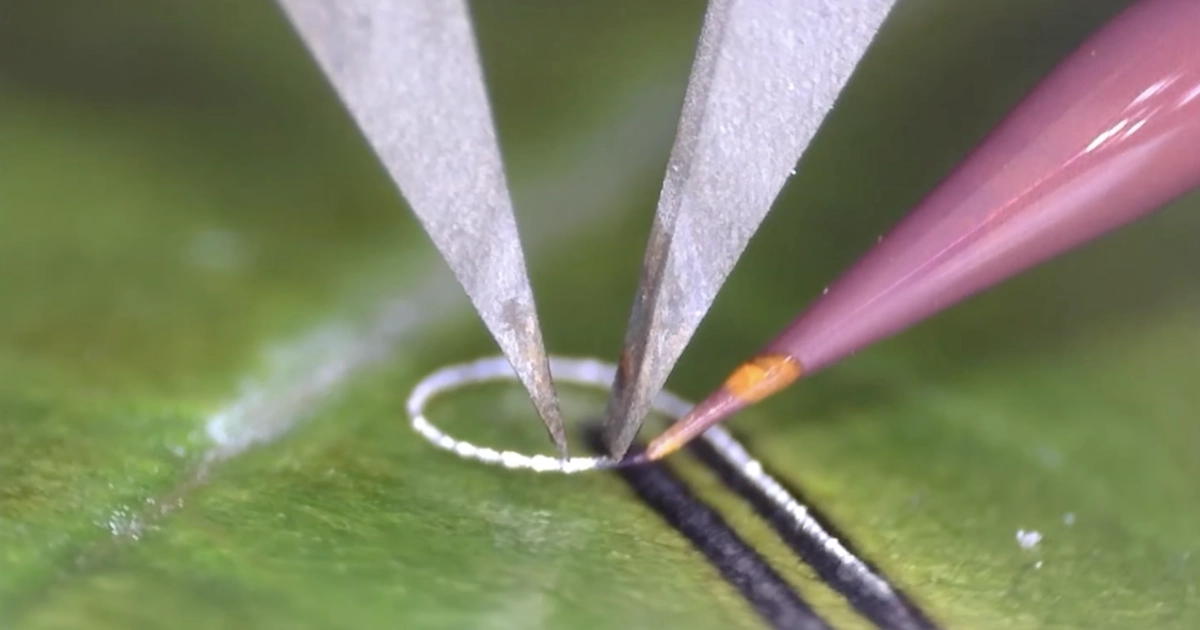
Engineers at Rice University have solved a critical challenge in the field of printed electronics: curing freshly printed conductive ink without damaging sensitive substrates. Their innovative solution, detailed in the journal Science Advances, utilizes a device called Meta-NFS that concentrates microwave energy into an area smaller than 200 micrometers, heating only the printed material to above 160 °C (320 °F) while keeping the surrounding area cool.
Traditionally, the process of sintering — which involves fusing conductive nanoparticles into a functional circuit — has been fraught with limitations. Standard methods either apply heat indiscriminately or only work on surfaces able to absorb specific light wavelengths, making them unsuitable for sensitive biomedical applications or living materials. The Meta-NFS circumvents these issues by heating the ink itself instead of the surrounding area.
This device operates effectively by increasing the amount of microwave power transferred to the printed material from about 8.5% to an impressive 79.5%. This efficiency stems from using graphene, which absorbs significantly more microwave energy than infrared lasers, allowing for safe and effective curing on delicate surfaces.
Moreover, this method allows for precise control over the electrical and mechanical properties of the printed pieces. By adjusting the microwave power during the printing process, the researchers can fine-tune the properties of the ink, altering its resistivity and functionality without needing to change materials.
The potential applications are vast. They have successfully printed wireless sensors on various substrates including living plant leaves, paper, silicone, and even directly onto a bovine femur bone. These sensors can monitor mechanical changes, making them ideal for use in smart implants. For instance, they’ve placed sensors on materials commonly used for artificial joints, offering real-time updates on wear and stress levels without invasive procedures.
Looking to the future, researchers at Rice are exploring the creation of ingestible diagnostic devices, advanced bionic interfaces, and next-generation soft robotics that incorporate tightly integrated electronics. This innovative approach has the potential to redefine manufacturing in electronics, addressing various unmet needs in technology and healthcare.
For more information about this groundbreaking research, you can visit the original source from Rice University here.