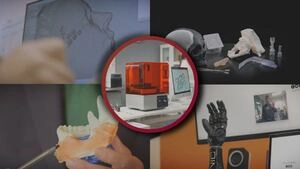
3D printing is revolutionizing healthcare, transitioning from experimental to essential clinical practice. A local 3D printer company, Formlabs, based in Somerville, is pioneering this transformation, partnering with hospitals like Boston Children’s to create unique prototypes that enhance patient care.
Bradley Heil, the Global Regulatory and Compliance Leader at Formlabs, emphasizes how this technology allows hospitals to produce their own medical devices, minimizing outsourcing costs. “We’re seeing more hospitals realize that there is this potential to do it themselves,” Heil noted. This shift enables rapid production of tailored solutions, with the potential to print items overnight for immediate use.
The advancement in 3D printing technology has significantly improved medical applications. Mariah Latshaw, a Manager of Trainer Design and Education at Boston Children’s Hospital, recalls the early challenges of creating prototypes with silicone molds, contrasting that with the current capabilities of 3D printers to produce intricate, multi-layered designs. These models provide doctors with a comprehensive view of the anatomy, allowing for detailed surgical planning.
Latshaw explains that these advanced models not only help surgeons prepare for operations but also reassure patients by visually explaining procedures. By educating patients about what to expect, these tools foster trust and confidence in the surgical process.
The ongoing improvements in 3D printing technology signal greater adoption in hospitals. The upcoming North American 3D printing conference in Boston aims to promote further experimentation and integration in the medical sector.
In summary, 3D printing is redefining healthcare efficiencies, enhancing the capabilities of medical professionals, and improving patient outcomes through personalized care solutions.