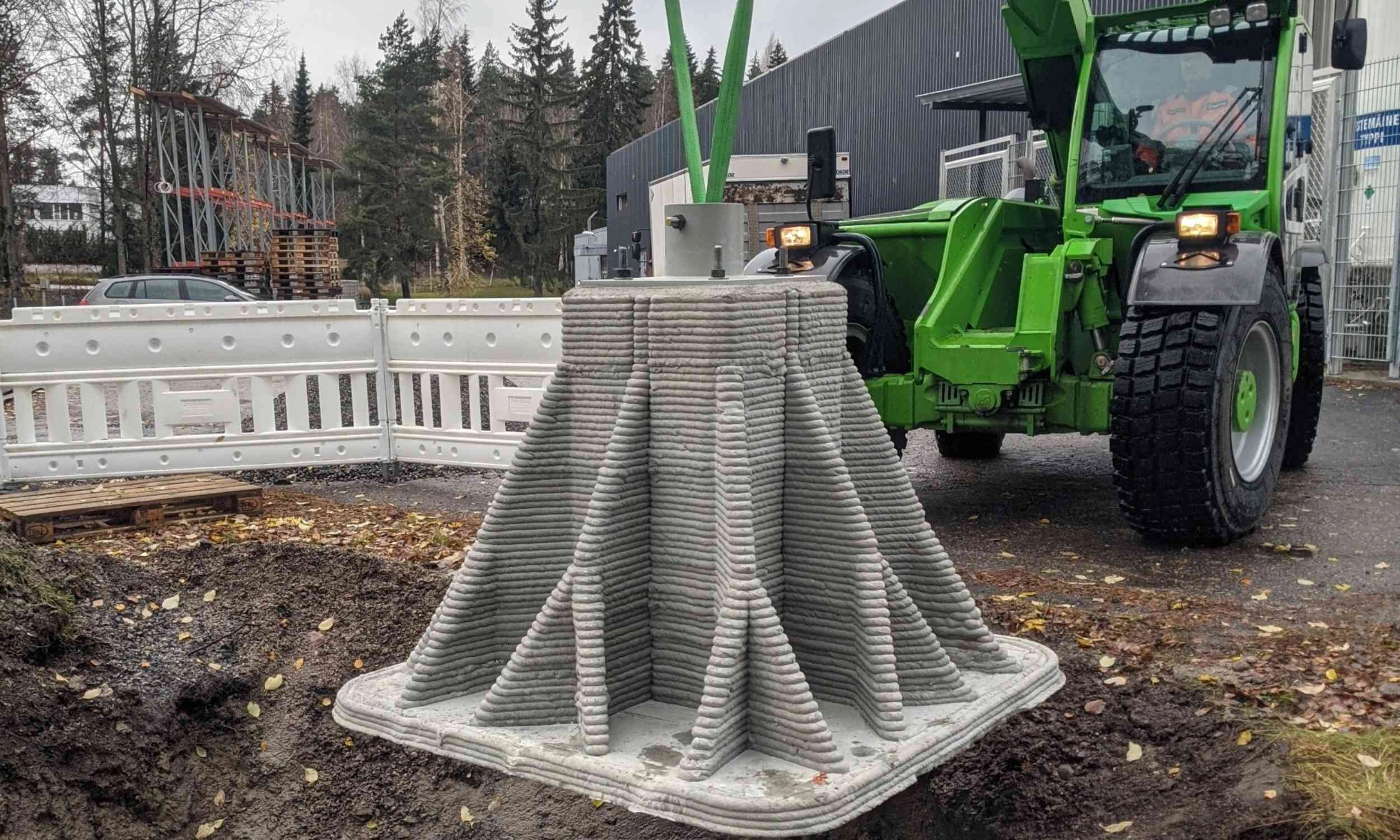
Scientists have made a significant breakthrough in the field of construction by enhancing 3D-printed concrete during the printing process. By embedding a polymer grid, they have achieved a material capable of withstanding 41% more load and bending 552% further before failing, shifting the application of 3D-printed concrete from fragile models to structures that can endure stress without breaking.
Strength During Printing
The innovation occurred at the University of South Australia (UniSA), where researchers developed a modified printer that integrates reinforcement into the print path. The mesh is fed through a separate nozzle located just behind the concrete nozzle, allowing it to be pressed into place under the weight of the freshly laid concrete. This integration is crucial, as it addresses the challenges of unreinforced 3D-printed concrete, which typically fails suddenly once a crack forms.
Why Printed Concrete Fails
Unreinforced printed concrete tends to fracture sharply once a crack opens due to its layered structure, which provides little support across these breaks. While steel reinforcement is generally effective in conventional concrete, it is cumbersome in printing processes and susceptible to corrosion. Instead, researchers turned to a fiber-reinforced polymer that can easily navigate the printing equipment and resists rust.
Tailoring the Concrete Mix
In contrast to traditional single-mix printing, this project employed “functionally graded” concrete, which incorporates layers of different concrete mixtures for varying performance requirements. For instance, a fiber-rich mix was used for the bottom layers to enhance bending resilience, while a lower-carbon slag-based mix reduced emissions.
From Manual to Automatic
Prior research in polymer grids indicated that they could improve the toughness of printed concrete, but the manual placement hindered fully automated production. Automating this process is crucial for enhancing construction speed and efficiency without compromising structural integrity.
What the Plates Did
The study examined how long the reinforced plates continued to support weight after a crack appeared. Two of the most effective layouts showed similar performance near failure, even with one using only half as much grid. Notably, the reinforced concrete maintained strength after the first crack, a sharp contrast to the sudden failure of non-reinforced plates.
Where Layers Turned Weak
Challenges were identified where printed layers met. The mesh grid reduced the contact area between fresh concrete layers, leading to weaker seams. Delays between applying different mixes created cold joints, which lacked proper bonding and contributed to failure. Identifying these weak spots is crucial for improving structural integrity.
Bond Slip Ruled Failure
Tests indicated that while the grid did adhere to the concrete, the bond was not exceptionally strong, causing slippage under stress. The fiber-rich mixture performed best compared to others. If the grid slips excessively, stress is concentrated into a single crack, destabilizing the structure.
Why the Idea Matters
This method of embedding reinforcement during the printing process has the potential to streamline construction and reduce labor requirements. The project received over $400,000 in funding from the Australian Research Council to explore these advancements, making it a pioneering initiative in the field.
What Comes Next
The successful implementation of this reinforcement strategy presents a promising future for larger 3D-printed architectural designs. However, challenges involving layer-to-layer bonding and inter-layer reinforcement must be addressed to ensure reliability and safety.
The detailed findings are published in Nature and mark a notable step towards practical applications of this technology in the construction industry. For further insights, refer to the publication in Nature.