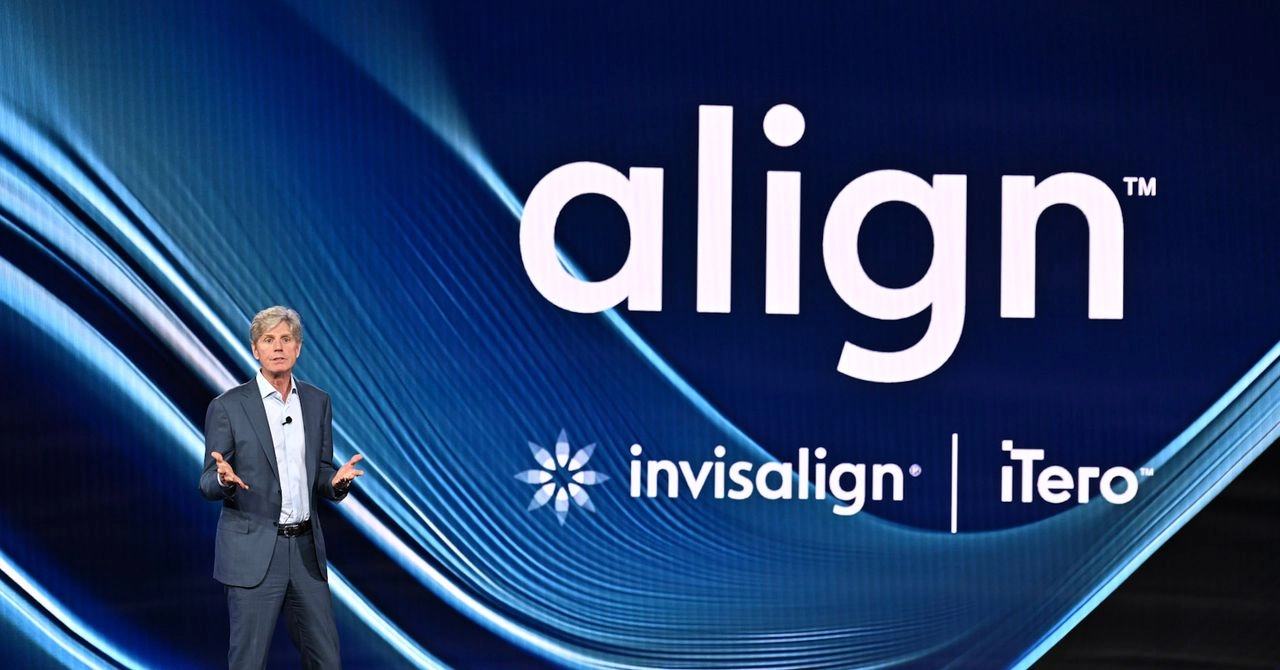
Joe Hogan, the CEO of Align Technology, the company behind the popular clear aligners known as Invisalign, is on the cusp of a significant transformation in the way the company manufactures its products. Currently valued at $12 billion, Align is preparing to implement a direct 3D printing process for its aligners, moving away from a lengthy mold-making method that produces excess waste. This shift could not only reduce costs and make treatments more affordable but also firmly establish Align as a dominant force in the 3D printing industry.
Hogan, who has been at Align for over a decade, notes that the company has successfully managed to triple its stock price during his leadership, effectively outpacing competitors while handling an impressive 2.6 million cases last year. With almost 22 million patients globally having used Align’s aligners, Hogan expresses a confident outlook for the company’s sustained growth, given its comprehensive control over the production process.
In a recent conversation at Align’s Silicon Valley lab, Hogan shared insights about his path to understanding orthodontics, the company’s market position, and the ongoing evolution in patient demographics. Initially unfamiliar with dental care, Hogan recognized the educational journey he needed to undertake, even starting treatment himself to gain firsthand knowledge of the Align experience.
Invisalign commands a significant share of the global clear aligner market, with Hogan revealing that the company generated around $4 billion in revenue in the orthodontics sector last year. He attributes the brand’s success to its pioneering approach of mass customization in 3D printing, where Align can efficiently produce millions of aligners daily.
Interestingly, Hogan clarified that Align Technology is, by far, the largest user of 3D printers in the world, a surprising fact considering the company’s relatively modest size compared to other tech giants. He explained that the 3D printing industry had largely failed to scale effectively and that Align’s innovations in the field set it apart from the competition.
As Align explores its global impact, Hogan notes a shift in patient profiles. While aesthetic concerns used to dominate, there is now a significant emphasis on functional health, particularly among older patients, leading to a more balanced focus on both aesthetics and long-term dental hygiene.
Addressing common patient concerns, Hogan highlighted that eating with aligners is discouraged due to potential risks like cavities or discoloration. He also shared his frustration with the materials limitations of current aligners and discussed the company’s initiative to invest in developing new resins that could allow for the creation of aligners through 3D printing.
The conversation also touched on the logistics of Align’s manufacturing processes, including the scale and efficiency necessary to maintain profitability while meeting the growing demand for aligners. Hogan emphasized that the journey to bring manufacturing back to the U.S. could become feasible as automation scales up, leading to more cost-effective production.
The interview underscored Align Technology’s innovative spirit under Hogan’s leadership and the potential future for orthodontics as the company prepares to navigate the evolving landscape of dental care and 3D printing technology.