NASA’s Artemis Program aims to establish a permanent human presence on the Moon, focusing on the southern polar region where there are craters rich in water ice. This ambitious goal is mirrored by efforts from other space agencies, including China and Russia, which plan to build bases in similar regions. A crucial aspect of these endeavors is ensuring that the lunar bases are self-sufficient, as resupply missions from Earth will be infrequent and time-consuming.
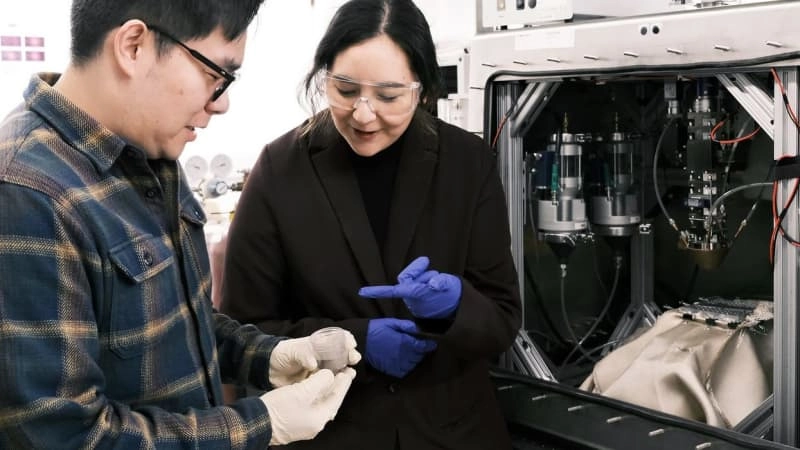
To support this need for sustainability, the concept of In-Situ Resource Utilization (ISRU) has gained prominence. Researchers from The Ohio State University (OSU) have proposed a specialized laser-based 3D printing method capable of converting lunar regolith into durable building materials suitable for the Moon’s harsh environment. Their study demonstrated that this method could yield structures resilient to radiation and other extreme conditions.
Led by Sizhe Xu, the research team utilized two types of lunar regolith simulants: Lunar Highlands Simulant (LHS-1) and Lunar Mare Simulant (LMS-1). They melted LHS-1 with a laser to create layers of material, which were fused to a base of stainless steel or glass. The experiments revealed that the fused regolith adhered well to alumina-silicate ceramic, suggesting that the substrate significantly influences the quality and stability of the printed material. Various environmental conditions were tested to evaluate the effectiveness of the 3D printing process under simulated lunar conditions.
The potential applications of this technology are vast. Besides being instrumental for immediate lunar missions, it could facilitate the construction of durable habitats on other celestial bodies, such as Mars, furthering the possibilities for sustained human exploration. Importantly, this research also highlights the broader implications for sustainable practices on Earth. As Sarah Wolff, the study’s lead author, noted, technologies developed for space can also provide solutions for managing resources efficiently here on our planet. Thus, the innovations in laser-based 3D printing not only seek to enable life in space but also strive to enhance sustainability on Earth.