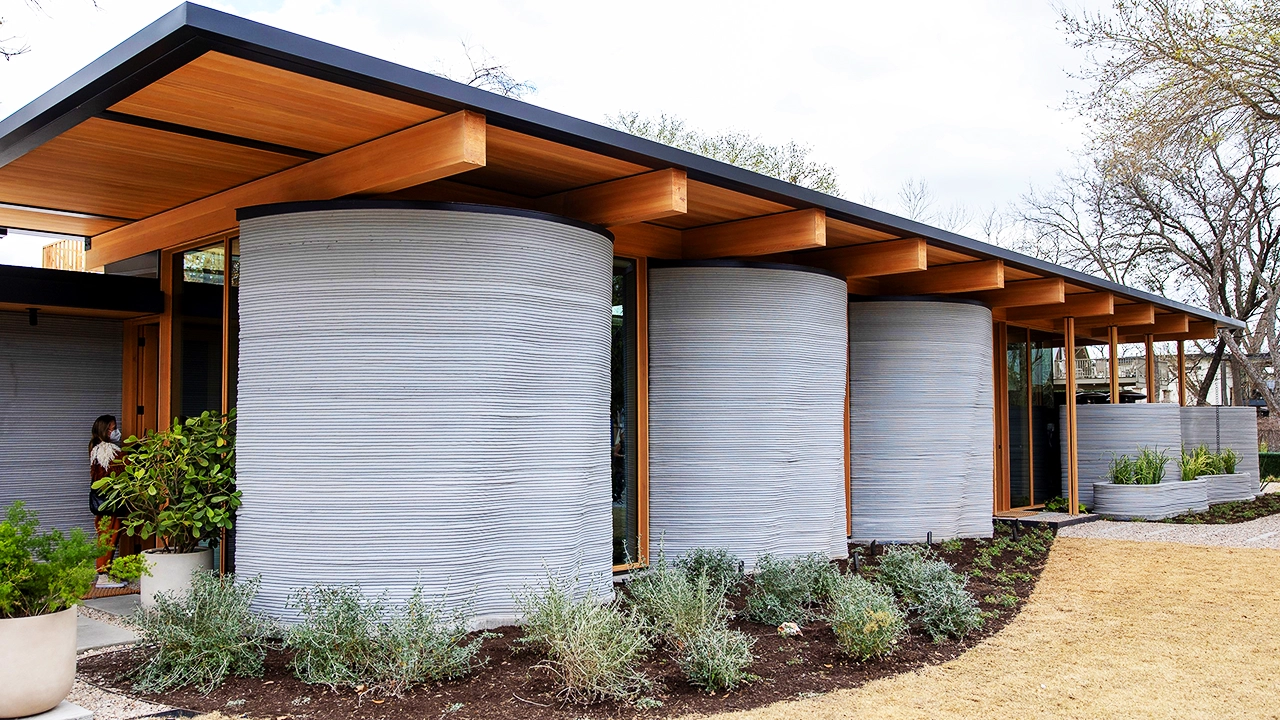
Rising housing demand in the United States, coupled with a shortage of skilled labor and escalating construction costs, is prompting builders to turn to innovative solutions. Increasingly, 3D printing technology is moving from experimental stages into mainstream construction, enabling homes to be built and sold in active neighborhoods.
Initially seen as a concept limited to small-scale projects, 3D-printed homes are now being constructed with efficiency and speed in mind. Using large-scale printers that extrude concrete, these homes can take shape much faster than through traditional methods. This transformative technology is not only about speed; it also addresses several critical challenges in the housing market, such as affordability and durability.
During an appearance on "Mornings with Maria," FOX Business’ Jeff Flock showcased a housing development in Austin, Texas, featuring these innovative homes. According to Jason Ballard, co-founder and CEO of ICON, this technology improves building resilience and energy efficiency, offering significant advantages over conventional construction. The concrete walls resist termites, weather, and general wear and tear, while also providing a degree of flexibility in design due to their curved interiors.
Homebuyers are showing interest in these developments. First-time buyers, in particular, seek the long-term efficiency and robustness promised by 3D-printed homes. For example, Vicky Pridgen, a recent buyer, emphasized the material’s durability when making her purchasing decision, noting that it would be difficult for pests to penetrate the concrete.
As traditional housing markets face ongoing supply challenges, builders are increasingly adopting alternative methods like 3D printing. This shift represents a potential path forward in addressing the ongoing housing crisis.