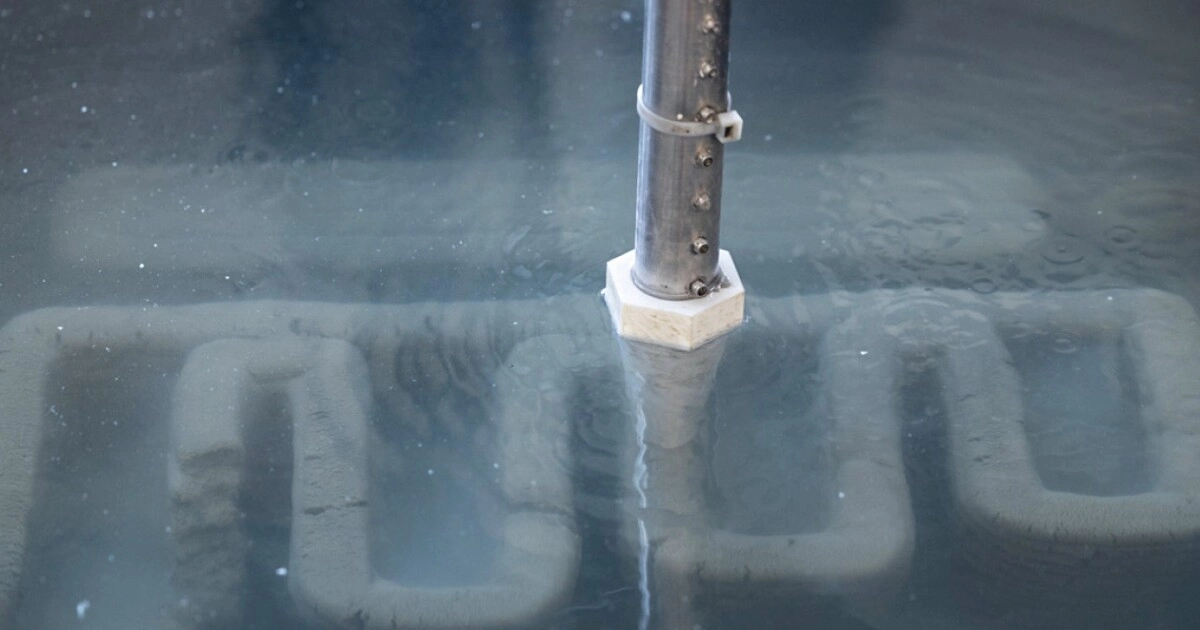
Researchers from Cornell University are pioneering a method for underwater 3D printing that could revolutionize maritime construction. Under the auspices of the U.S. Defense Advanced Research Projects Agency (DARPA), the team is developing concrete applicable for underwater structures using seafloor sediment, which reduces material transport needs.
For months, the researchers conducted test prints in a large water tank, assessing how layers of concrete were deposited and analyzing their strength and texture. Professor Sriramya Nair leads the project, utilizing a 6,000-pound robotic system for the 3D printing process.
Traditional underwater construction faces significant challenges due to the harsh marine environment and the need for materials that can withstand corrosion and pressure. DARPA’s challenge aims to find more efficient methods of completing these construction tasks. The Cornell team developed a novel two-stage concrete printing technique that overcomes difficulties in maintaining material integrity underwater.
This innovative approach involves injecting a special admixture directly into the nozzle of the printing apparatus, allowing the material to maintain flow and solidify quickly upon deposition. This method accommodates the variations in temperature and printing speed, ensuring precise construction and minimal ocean disturbance.
The team has received funding of $1.4 million to further their research and is currently engaged in preparing for a competitive moment where multiple teams will attempt to 3D print an arch structure underwater. The results of this competition are anticipated in March, as the team races to align their process innovations to take home a prize.
For more updates on this fascinating project, follow the research development at Cornell University.