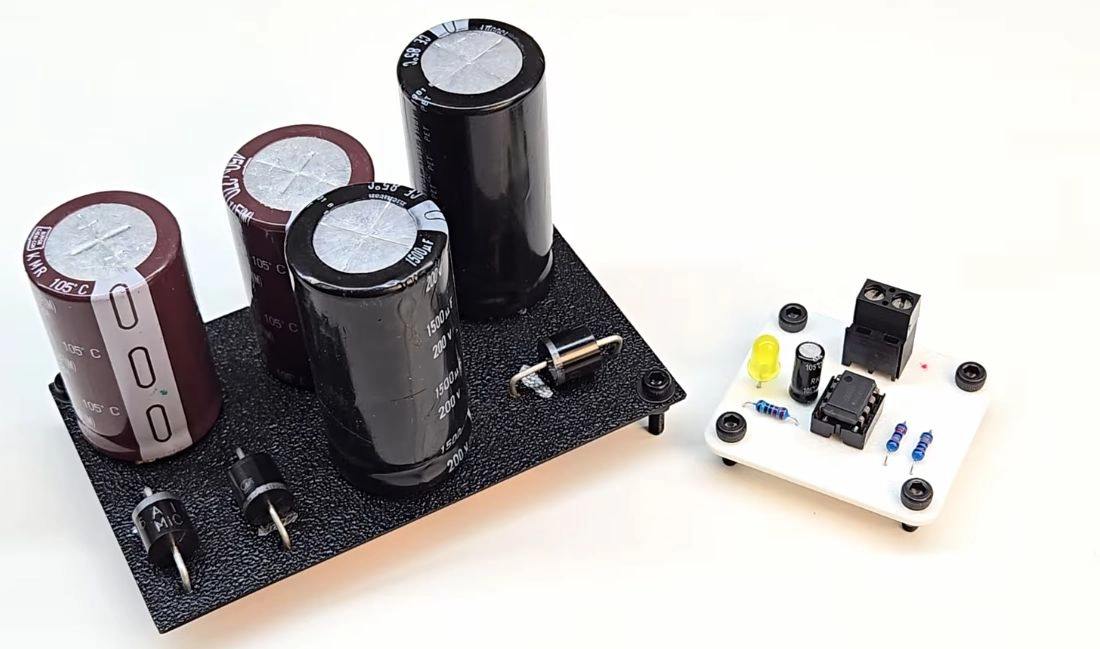
In a recent demonstration, QWZ Labs showcased an innovative technique for making custom printed circuit boards (PCBs) using just a 3D printer and copper tape. This method significantly simplifies PCB creation and makes it more accessible.
To begin the process, one designs the PCB in KiCad or a similar electronic design automation (EDA) program, exporting it as a 3D model. This model is then imported into a CAD application, such as Autodesk Fusion, to extrude the traces by 0.6 mm. The modified model is sent to a 3D printer slicer for preparation.
Once printed, copper tape is adhered to the PCB, and users can then use a cutting tool to follow the raised lines of the extrusion. After trimming away excess copper foil, the remaining copper traces can be punctured for component placement and soldering.
While this method results in single-sided boards, there’s potential to adapt it for double-sided designs with more effort. When designing in the EDA, it’s advised to keep the trace width to about 2 mm and ensure there’s sufficient clearance to facilitate easier cutting. Notably, using the Arachne wall generator option can aid in filling undesirable voids during printing. For through-holes, a diameter of at least 1 mm is recommended to prevent manual drilling complications.
Soldering onto copper tape is straightforward; however, desoldering may pose challenges, especially when using hot air methods. PLA is mentioned as the material used for the PCB, which has the downside of being relatively soft and prone to melting under heat, unlike traditional FR4 materials. Users are encouraged to experiment with various FDM, SLA, or SLS materials that might perform better for their specific boards.
While this approach may not be universally applicable to all PCB types, it appears to offer a more user-friendly alternative than struggling with conventional prototype perfboards. With future advancements in copper deposition techniques, the task of creating fully 3D printed PCBs could become even simpler.