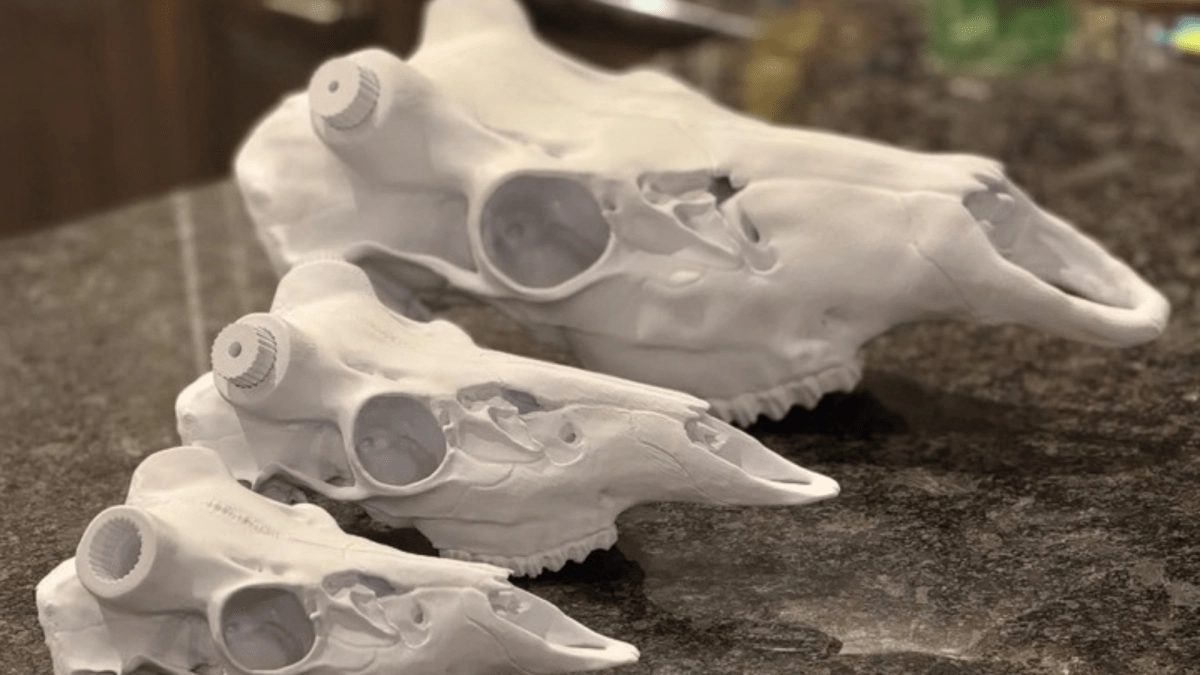
3D printing has transformed the process of mounting animal skulls, making it significantly less gruesome. A range of hunting enthusiasts and companies are leveraging this technology to produce replicas of deer and other trophy animals’ skulls. Once these skulls are 3D printed, hunters can easily attach their real antlers or horns through pre-made holes. This method reduces the tedious and often messy process of cleaning bones, which traditionally involved boiling or using beetles for flesh removal.
One such company, Bucks N Bull Skulls, owned by Shawn Sanchez, illustrates this innovation. Sanchez scans real animal skulls using an iPhone app, converting the images into 3D models for printing. A typical deer skull requires around 12 to 15 hours to print, while a more complex elk skull can take up to 50 hours. Alongside artist Daniel Smith, Sanchez enhances the designs and ensures they can support the weight of attached antlers.
Traditionally, preparing a skull for mounting has been a labor-intensive endeavor that could involve boiling a head in soapy water or using water pressure to strip away flesh, both of which are time-consuming and messy. Another method involves using beetles that consume the flesh but also require maintenance and can produce unpleasant odors. Alternatively, hiring professional taxidermists can be costly and time-intensive.
3D-printed skulls not only simplify this process but also offer durability; they remain white and retain their shape without the yellowing associated with real bones over time. Furthermore, this technique allows enthusiasts, including those who collect shed antlers—antlers that deer naturally lose—an opportunity to create mounts without resorting to hunting.
Bucks N Bull Skulls is not alone; many enthusiasts share their 3D models online, helping to democratize access to this technology. Sanchez believes that while providing digital files may compete with sales, the convenience and quality of professionally printed products will likely keep business thriving.
Thus, the emergence of 3D-printed skulls represents a significant leap in both hunting culture and technology, making it accessible to more people while promoting ethical practices in wildlife representation.