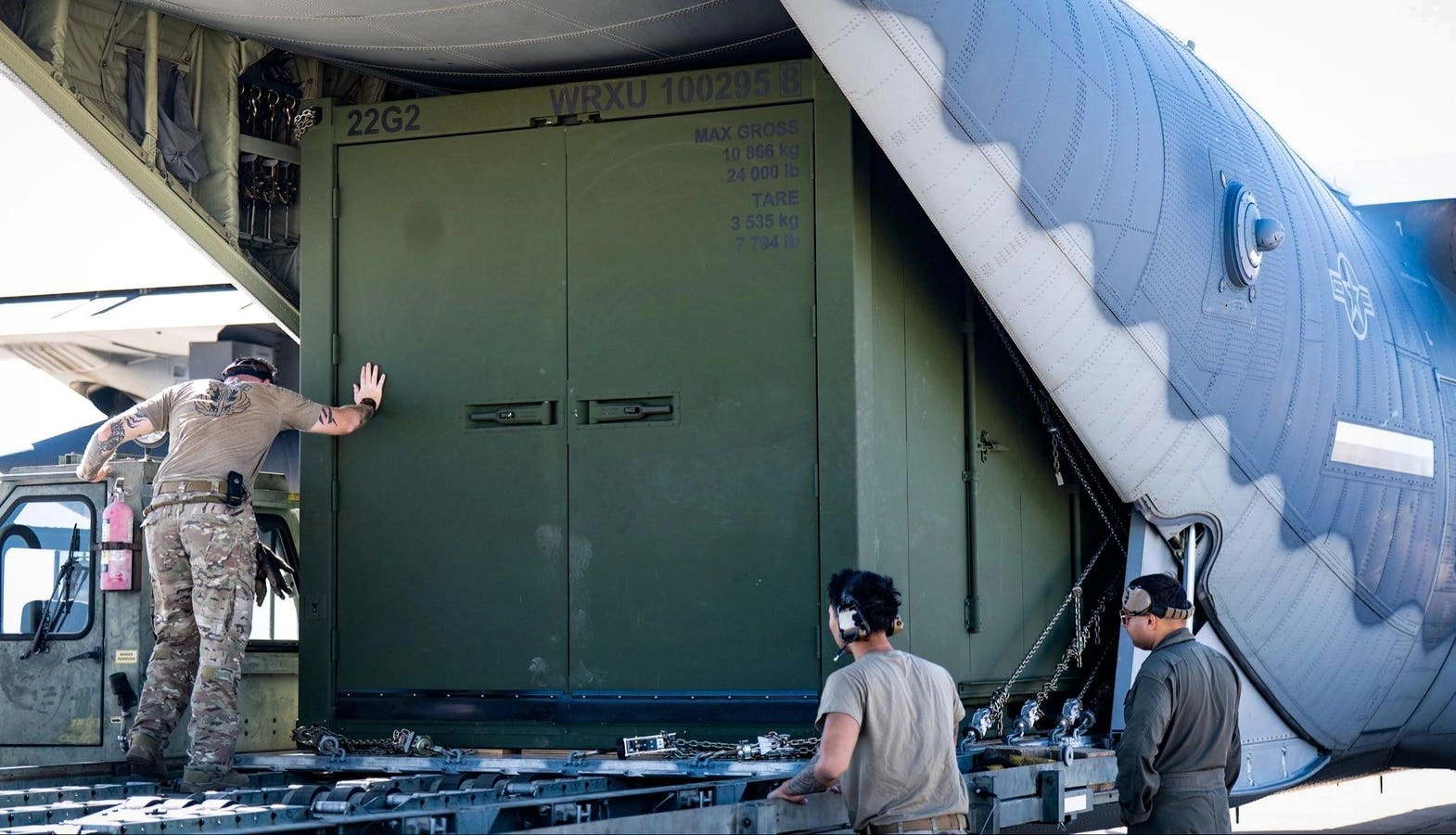
Inside a shipping container, the "xCell" expeditionary mobile factory from Firestorm Labs is revolutionizing military operations by 3D printing drone components on-site for the Air Force. This innovation, enabling the quick production of the modular Tempest unmanned aerial system (UAS), greatly reduces logistics and manufacturing timelines, enhancing military readiness.
Firestorm recently secured $47 million to expand this technology, reflecting a broader trend in the defense sector where 3D printing is transitioning from a theoretical concept to practical, industrial-scale applications. Industry leaders emphasize that the U.S. military is responding to geopolitical challenges, supply chain vulnerabilities, and the rapid advancements of adversarial technologies by adopting additive manufacturing (AM) to modernize its production capabilities.
As defense spending rises, companies are rapidly embracing 3D printing technologies to meet immediate needs. Firms like Beehive Technologies are advancing their projects, such as the hot-fire testing of a 3D-printed drone engine, while others like EOS and Stratasys ensure that technical infrastructure is prepared for this transformation, having anticipated such demands over the past years.
Internal discussions among military planners have shifted significantly. Manufacturers like Roboze have noted a newfound urgency, as the military aims to produce drone parts and spare components for land vehicles immediately. This urgency is compounded by evolving regulations that may ease the complex qualification processes typically associated with military contracting.
Recent policy changes by the Department of Defense (DoD) are promising, allowing greater flexibility for using commercial off-the-shelf products and accepting more parts from 3D printing processes. Defense Secretary Pete Hegseth has championed a pragmatic approach, noting that an 85% solution delivered quickly is more effective than a perfect solution faced with continual delays.
Major defense players, including Lockheed Martin and Northrop Grumman, are actively employing 3D printing to create advanced hardware, with applications ranging from drone components to critical tank repairs. For example, Meltio technologies showcased their 3D printing capabilities during recent naval exercises by rapidly producing a vital pump part for a vessel, which highlights the potential for near-instant repairs in field conditions.
The narrative of 3D printing’s role is evolving from merely creating single prototypes to achieving large-scale production capabilities. Industry leaders are advocating for a centralized manufacturing model, akin to semiconductor foundries. They argue that establishing large-scale additive manufacturing operations within the U.S. is crucial for national defense.
Nikon Advanced Manufacturing, which has opened a substantial 90,000-square-foot facility in California, exemplifies this strategic shift towards large-scale production. The overarching consensus among experts is that the military’s use of additive manufacturing is inevitable; the challenge now lies in the speed of its implementation.
The vision for the future involves a combination of large central factories producing standard parts and mobile units, such as the xCell, which can manufacture components right at the front lines, thus directly addressing the evolving demands of modern warfare with agility and efficiency.