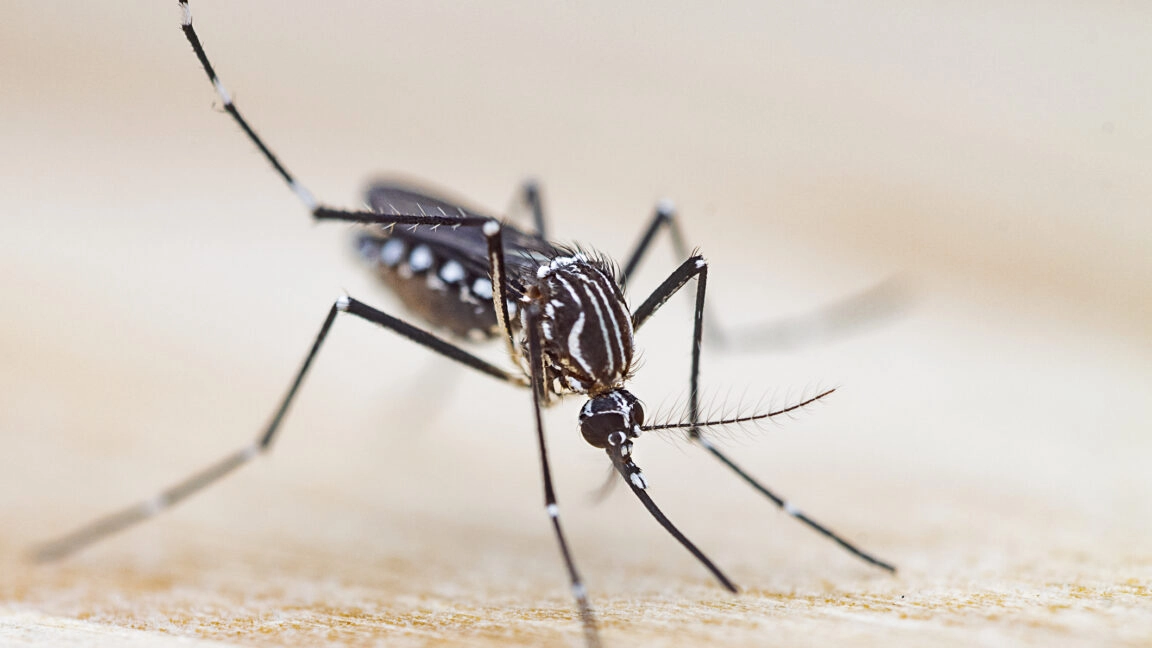
Necrobotics is a burgeoning field that merges synthetic materials with biological components to create unique robots. This approach has already led to innovations like micro-grippers using parts from dead spiders and walking robots inspired by cockroaches. Inspired by these advancements, Changhong Cao, a mechanical engineering professor at McGill University in Montreal, sought to create something groundbreaking that deviated from traditional robotics. Instead of building a robot, his team focused on adapting a female mosquito’s proboscis to serve as a nozzle for a highly precise 3D printer.
Exploring Natural Nozzles
To determine the ideal nozzle for their 3D printing system, Cao’s team conducted an extensive evaluation of various natural micro-dispensing tools. They studied the stingers of various insects and arachnids, as well as the fangs of venomous snakes and centipedes, all of which are evolved to deliver fluids. However, each had limitations, as many were either too curved or poorly suited for continuous dispensing—an essential requirement for 3D printing.
Conversely, proboscises, the tube-like mouthparts insects use to draw blood, are naturally designed for a steady flow. Through their research, the team evaluated options like tsetse flies and bed bugs before ultimately selecting the female mosquito due to its straight, long structure and robust nature, ideal for withstanding printing pressures.
Developing the 3D Necroprinter
Cao’s creation, dubbed the "3D necroprinter," utilizes an Aerotech precision motion stage enabling the nozzle to move with an incredibly fine resolution of 10 nanometers. This device pushes the material through a syringe-based direct ink writing system. The team meticulously removed the proboscis from a euthanized mosquito under a microscope and integrated it into the nozzle assembly using UV-curable resin.
The resulting necroprinter boasts a resolution of 18 to 22 microns—double that of typical commercial metal dispensing tips. Initial tests included printing honeycomb structures, a microscale maple leaf, and cell scaffolds, showcasing the printer’s potential.
Challenges Ahead
Despite its impressive capabilities, the mosquito nozzle revealed limitations, particularly in its resistance to internal pressure, making it less effective for high-viscosity inks that yield more geometrically stable models. Furthermore, while it excels in precision, human-engineered glass tips can produce even finer prints and withstand greater pressures.
Cao is optimistic about future solutions to these challenges, suggesting that coating the proboscis with a ceramic layer could enhance strength. If successful, these organic nozzles could revolutionize applications, such as creating living cell scaffolds or intricate electronic components, at a significantly lower cost.
Cao’s team estimates that these organic nozzles could be produced for about 80 cents each, while current glass and metal alternatives range from 32 to 100 times more expensive. Their research not only aims to innovate in 3D printing but also seeks to address the practical challenges posed by mosquitoes, highlighting the dual benefits of this fascinating approach in the field of necrobotics.
For further insights, see the published research in Science Advances here.