August 20, 2024
Researchers from RMIT University in Australia, in partnership with Tescan Group in Czechia and the University of North Texas in the USA, have made a significant breakthrough by developing new bainitic titanium alloys (Ti-Cu-Fe) tailored for Additive Manufacturing (AM). This innovation is expected to greatly enhance the quality and performance of components manufactured through AM, especially in sectors that demand materials with high strength.
The research, detailed in Materials & Design, aims to utilize constitutional supercooling in Ti-Cu-Fe alloys to hinder the formation of large columnar grains, a prevalent issue in AM titanium alloys. Through this technique, a refined, equiaxed grain structure is achieved, critical for enhanced mechanical properties of the alloys.
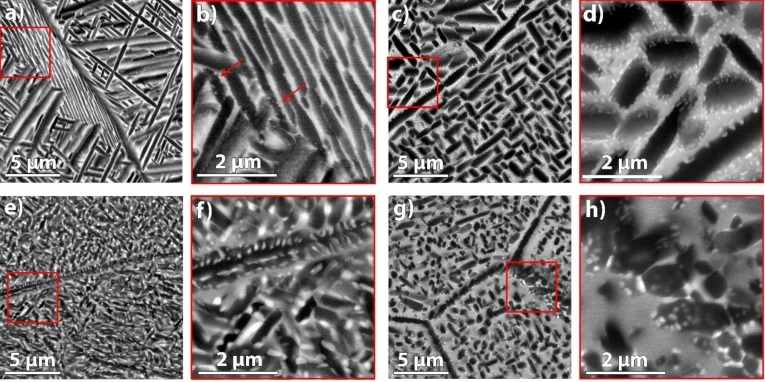
Through the use of Directed Energy Deposition (DED), a particular form of Additive Manufacturing, the team was able to control the solidification microstructure effectively. This control led to the creation of a bainitic microstructure marked by an α-phase, Ti2Cu intermetallic phase, and a retained β-phase matrix. Such a microstructure proves to be of great advantage as it amplifies the strength and durability of the material, which is pivotal for high-demand applications.
The development of the Ti-Cu-Fe alloy system by researchers shows great potential for enhancing mechanical properties through advanced techniques like grain boundary engineering and the introduction of more nucleation sites. These improvements might result in stronger and more durable components, which could be beneficial in various applications.
This advancement is particularly significant for critical sectors such as aerospace, automotive, and biomedical, where the demand for high-performance materials is constantly increasing. Moreover, the use of economical elemental powders combined with sophisticated manufacturing processes such as Direct Energy Deposition (DED) could make these innovations both affordable and widely available.
In conclusion, the emergence of new bainitic titanium alloys marks a major advancement in Additive Manufacturing. This research not only addresses the challenges associated with the microstructure of components produced via AM but also paves the way for the development of materials with outstanding mechanical properties. As Additive Manufacturing evolves, technologies such as these are expected to have a major impact on its future direction.
For a detailed exploration of the study, the complete analysis can be found here.
Source: metal-am.com
Discover how maker Fraens 3D printed an easy-to-use table loom, ideal for DIY enthusiasts and those new to weaving.
Drone logistics company Blueflite is initiating a new venture to develop hydrogen storage tanks for unmanned aerial vehicles (UAVs).
Hyliion has secured a Small Business Innovation Research (SBIR) government contract from the United States Navy, signaling the start of…
6K Additive has been selected by the RTX Technology Research Center (RTRC) and the University of Arizona for involvement in the Environmental Additive… read more »
Shanghai Hanbang 3D Tech Co, Ltd (HBD) has declared a major development in the production of turbine blades through additive manufacturing. In a… read more »
Supernova, recently established from BCN3D this February, has unveiled the formation of a new business division focused on propelling 3D… read more »
Jamplast, a leading resin distributor headquartered in Ellisville, Missouri, has commenced an innovative project by creating 3DSHQ, a specialized business division… read more »
While our primary focus is often on the latest advancements in 3D printing, it’s essential to acknowledge other significant innovations in the broader…
Microalgae, such as Odontella aurita and Tetraselmis striata, are emerging as valuable resources for producing eco-friendly materials used in 3D laser printing.
Sandia National Laboratories, in collaboration with Wetzel Wind Energy Services and Stratasys Direct Inc., has designed an innovative turbine blade tip that could…