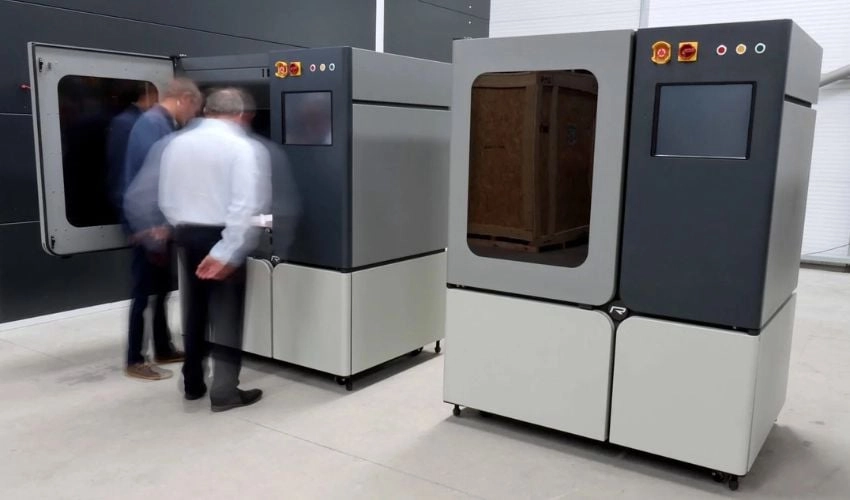
Raplas Technologies is making significant strides in the field of industrial 3D printing from its base in the UK. Founded by Richard Wooldridge and Paul Freeman, both seasoned professionals with over 30 years of experience, the company focuses on resin additive manufacturing solutions that promise exceptional accuracy and repeatability. Currently, their portfolio includes three laser-based stereolithography (SLA) systems tailored for demanding sectors like automotive and defense, designed for users who have outgrown existing options.
Richard Wooldridge, a former 3D printing technical specialist at Ford Motor Company, shared that his journey led him to design a functional 3D printer from the ground up after retiring. Paul Freeman, who has a background in engineering and previously worked with 3D Systems SLA machines, joined Richard to create Raplas Technologies out of their shared frustration with existing machines, which were often inflexible and constrained by material sourcing.
Raplas Technologies offers a range of SLA machines—PR 450, PR 700, and PR 800—with varying build volumes. They are also set to introduce a fourth machine at the upcoming Formnext trade show. The company has developed its own resin systems and partnered with a manufacturer to produce materials that perform exceptionally well, including various colors, crystal-clear options, and high-performance resins.
The integration of Materialise’s Magics software into their systems allows for dynamic control, enabling users to adjust printer parameters for different part types within a single build, enhancing flexibility in production.
One of the standout features of Raplas’ machines is their capability to support mass production. Traditional 3D printers often falter in terms of precision and repeatability for high-volume applications, but Raplas has designed its machines to excel in these areas. Their equipment is built with standard components, ensuring availability of replacement parts and the capacity for future upgrades.
Current clients are typically seasoned users from industries that demand advanced manufacturing capabilities, especially within automotive and defense applications. The UK Ministry of Defense has even selected Raplas machines for projects requiring true mass production capabilities.
Looking ahead, Raplas Technologies aims to increase awareness of its innovative products and expand its market reach, particularly in the United States. Wooldridge emphasizes the need for the additive manufacturing industry to focus on quality and reliability, suggesting that the market is ready for a more mature phase free from inflated claims.
In summary, Raplas Technologies stands out as a cutting-edge manufacturer poised to substantially impact the 3D printing landscape, with a commitment to accuracy, flexibility, and future-ready solutions. For more details on their offerings, visit Raplas Technologies.