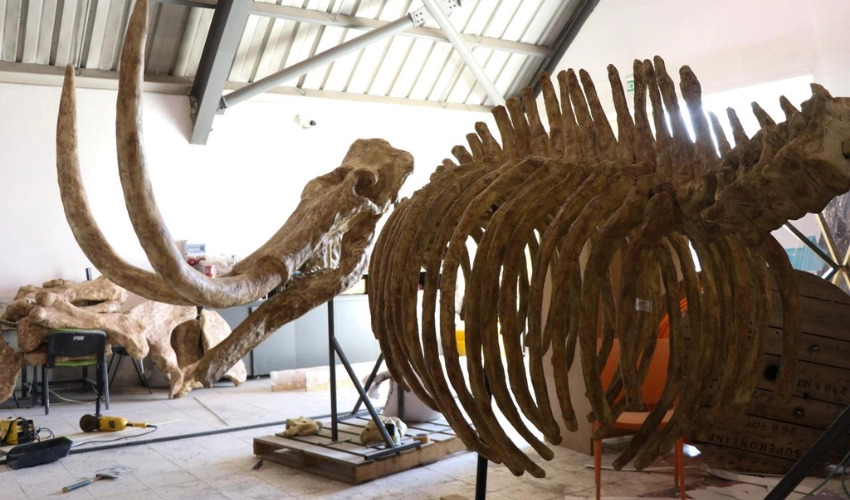
In the Kayseri province of central Türkiye, researchers are employing 3D printing technology to restore ancient fossils that are approximately 7.7 million years old. These remains were uncovered near the Yamula Dam by a goat herder in 2017 and include a variety of species such as saber-toothed cats, giraffes, elephants, mammoths, rhinos, three-toed horses, antelopes, turtles, and pigs. With extensive excavation now complete, the fossils are being meticulously cleaned, conserved, and prepared for display at the upcoming Kayseri Paleontology Museum.
Traditionally, gaps in fossils were filled using cumbersome chemical molds, a method that was slow and could potentially harm the specimens. However, the integration of high-precision 3D scanners and printers allows researchers to digitally replicate missing bones, avoiding exposure to harmful chemicals. After scanner data is collected from each fragment, the team can design replacement parts and print them locally. This innovative process not only preserves the integrity of the original fossils but also accelerates the restoration timeline.
The transition to 3D printing has also led to significant cost savings. Previously, mounting a giraffe skeleton could cost millions of lira and was often outsourced internationally. Now, teams can create and assemble the pieces in-house at a fraction of the cost. Full mounts of giraffes, rhinos, and elephants have already been completed, with a saber-toothed cat mount nearing its final stages. Each printed piece fits flawlessly with the original fossils, enabling visitors to experience the fully reconstructed skeletons for the first time.
This process is rooted in careful scientific analysis. Researchers begin by identifying each species, gathering measurements from published academic studies, and creating mathematical diagrams to guide the design. These models are then processed through a slicer software before being sent for printing. The printed parts are assembled with the original bones, resulting in complete skeletal displays.
Once the museum is operational, these reconstructed mounts will provide visitors with an insightful glimpse into the prehistoric landscapes of Türkiye, showcasing the large mammals that once roamed the region. The employment of 3D printing not only breathes new life into these ancient remains but also merges modern technology with paleontological research, making historical discoveries more accessible to the public.