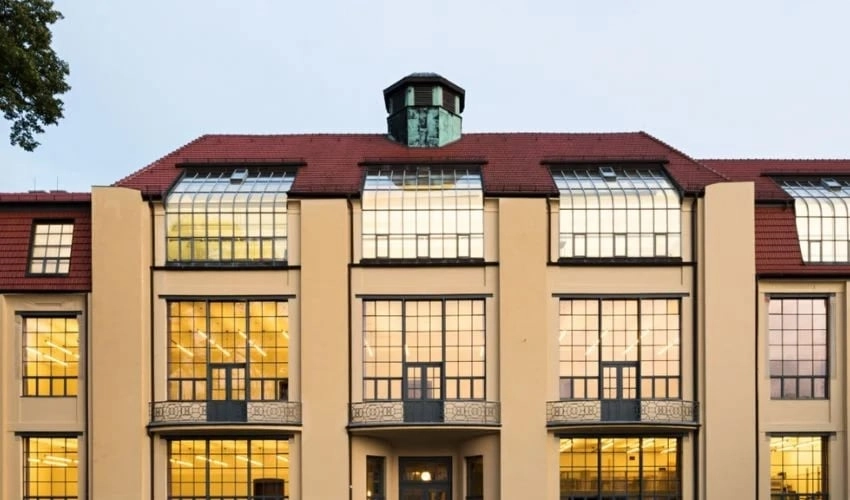
3D printing is making significant strides within traditionally craft-based and artistic fields, particularly in higher education, where it merges design, technology, and innovation. At the Bauhaus University Weimar, renowned for its fusion of art, design, architecture, and engineering, 3D printing is being embraced as a vital tool to explore and expand creative possibilities. Faculty and students are actively utilizing additive manufacturing to explore new materials, sustainable building practices, and interdisciplinary collaborations.
The university’s approach to 3D printing builds on the historical ethos of the Bauhaus movement, which arose in a time of immense social and political change and focused on the industrialization potential. Presently, Junior Professor Dr.-Ing. Luise Göbel, who leads the ‘NanoMatFuture’ research group, emphasizes the substantial impact of 3D printing on the construction industry. Göbel’s research aims to develop intelligent concrete that can adapt its flowability during the printing process, enhancing 3D concrete printing capabilities.
Conversely, Dr. Michael Braun, a product designer and member of the Faculty of Art and Design, explores how 3D printing can redefine the boundaries between design and manufacturing. He highlights the technology’s role in generating creative tensions and diminishing the traditional separation between design and execution.
Both faculty members note that students are increasingly enthusiastic about additive manufacturing, perceiving it not just as a technological novelty but as a chance to engage with pressing ecological, social, and aesthetic questions. This year, the university will launch the DigitalPrintCreteLab, allowing students to conduct experiments with guidance from experts. The lab will include various materials and sensors, providing insights into the printing process.
Moreover, courses like Robotic Tectonics bring students from architecture, civil engineering, and design together to experiment with robotically controlled 3D printing. These initiatives encourage students to view 3D printing as both a construction technique and a medium for design exploration.
Overall, the integration of 3D printing at Bauhaus University Weimar fosters a dynamic educational environment where students can engage with innovative design practices while contributing to the evolving landscape of additive manufacturing. They are encouraged to push boundaries, experiment with new ideas, and take the theoretical aspects of their studies into real-world applications.