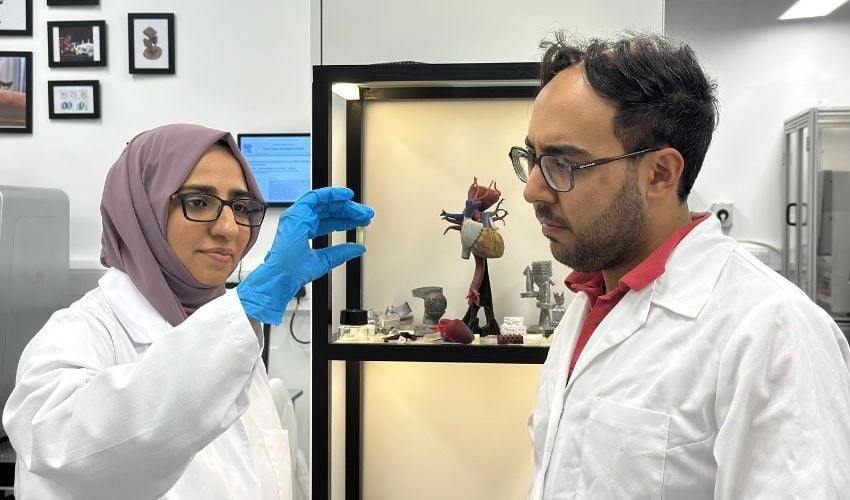
The gut microbiome comprises a diverse ecosystem of microorganisms, including bacteria, viruses, fungi, and parasites, which play a crucial role in various bodily functions. To further research in this understudied area, a team at NYU Abu Dhabi created a 3D printed capsule named CORAL (Cellularly Organized Repeating Lattice). This innovative capsule is designed to collect microbial samples from the small intestine during its transit through the digestive system, potentially shedding light on how gut microbiota affect overall health.
Historically, studies of the gut microbiome have focused predominantly on fecal samples, which mainly reflect the microbial composition of the large intestine. In contrast, the small intestine is central to many vital processes involving microbial interaction, making it a vital but often overlooked area of study. Hanan Mohammed, a co-author of the study, stated that understanding these communities could significantly impact disease detection, treatment tracking, and the development of microbiome-based therapies.
The inspiration for the CORAL capsule came from marine life, specifically the structures of marine corals, known for fostering diverse microbial ecosystems due to their porous qualities. This design allows the capsule to capture more microorganisms by maximizing its surface area through a geometric triply periodic minimal surface (TPMS) pattern, which effectively traps bacteria.
The capsule consists of three parts: an outer shell, an inner core, and a cap that keeps the core secure until it is retrieved. The construction process utilizes projection micro stereolithography (PμSL), which allows the entire capsule, measuring approximately 2.1 mm in diameter and 8.2 mm in length, to be fabricated in a single step, minimizing cost and time.
After being swallowed, the CORAL capsule navigates the digestive tract, collecting microbial samples that researchers can analyze after it is expelled. Initial tests on animal tissues and live rats demonstrated the capsule’s safe passage through the body, capturing microbial communities typically missed in fecal samples, such as Streptococcus and Enterococcus.
The design’s simplicity enhances its reliability. The team anticipates commencing trials involving human participants soon. Co-author Aashish Jha emphasized CORAL’s potential as a groundbreaking tool for accessing previously inaccessible parts of the gut, facilitating research into the small intestine’s microbial communities and potentially transforming non-invasive diagnostics and personalized treatments.
For further reading on the technology behind CORAL and its implications, you can access the study here.