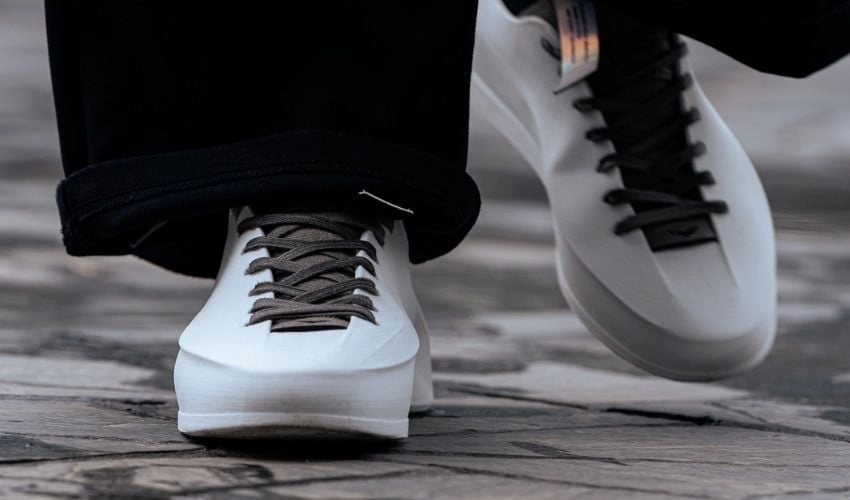
For several years, 3D printing has made significant strides in the footwear industry, enabling designers to craft artistic pieces without limitations. Aiming to blend innovation with sustainability, the Italian startup Servati has focused on creating fully recyclable footwear collections through additive manufacturing. They gained attention in the fashion realm during Milan Fashion Week 2025, showcasing their collections at the Palazzo Giureconsulti. In this interview, CEO Matteo Di Paola shares insights into Servati’s journey and key projects.
Introduction to Servati
Matteo Di Paola, the co-founder of Servati, highlighted that their journey began with 3D printing, seen as a transformative technology. This innovation helps bypass the entry barriers in the footwear sector, eliminates setup costs related to new model development, and allows unlimited creativity in design.
Foundation and Mission of Servati
Founded out of a passion for technology and sneakers, Servati aims to revolutionize the footwear industry with sustainable designs that marry style and environmental responsibility.
Utilization of 3D Printing
All shoes are manufactured in-house using over 30 FDM printers. The assembly process incorporates a textile upper without adhesives or solvents, adhering to a disassembly principle that makes the product completely recyclable.
Creation Process of Servati Shoes
The creation process begins with digital design using 3D modeling software. The model is sized accordingly, printed, and refined before assembly with the upper. LiDAR technology is utilized to monitor print quality in real time, reducing errors and waste.
3D Printing Technologies and Materials
Servati primarily uses FDM printers to maintain a sustainable recycling chain. Their printer farm includes recognized brands like Artillery, Creality, and Anycubic, ensuring efficiency and flexibility.
Target Customer Base
Servati predominantly caters to B2C customers via their e-commerce platform, appealing to design enthusiasts focused on innovation and sustainability. They also partner with players in the fashion and design sectors, producing prototypes for other businesses to minimize development time and costs.
Noteworthy Events and Projects
Servati has participated in several startup competitions and gained recognition from the Ministry of Made in Italy, exhibiting alongside major companies like Brembo and Ferrari. They were also selected for Milan Fashion Week 2025, showcasing their products and production methods.
Servati Design Challenge
This annual initiative invites young designers to submit sneaker ideas that are developed using Servati’s 3D printing capabilities. The winner’s project is produced and sold through Servati’s channels.
Sustainability Commitment
Sustainability is a fundamental focus at Servati. Their patent ensures each sneaker is 100% recyclable and designed for easy disassembly. Through the Boomerang Process, customers can return used shoes for discounts on new pairs, effectively closing the production loop.
Role of 3D Printing in Design and Fashion
3D printing significantly lowers production costs, enables rapid prototyping, and allows for on-demand production while minimizing waste.
Conclusion
Matteo encourages belief in the potential of 3D printing as it continuously transforms design and fashion. Servati invites those interested to connect and explore the exciting possibilities within this innovative field. For more details, visit their website.