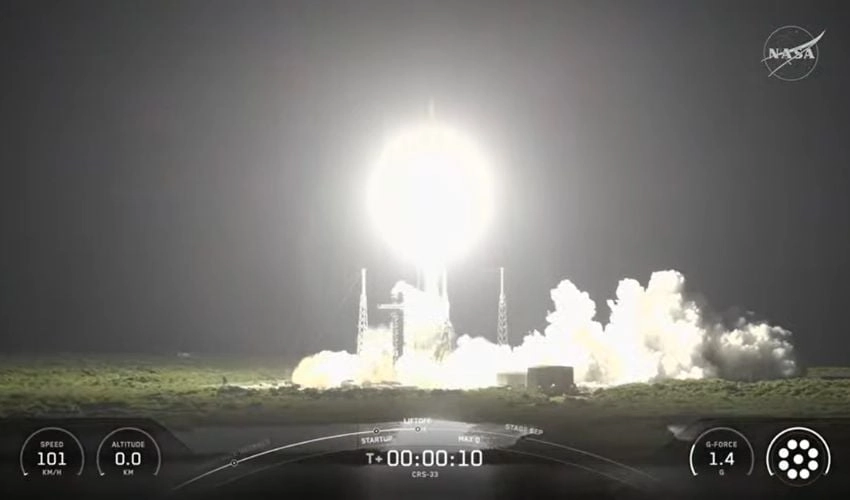
In late August 2025, NASA and SpaceX successfully launched the 33rd commercial resupply mission to the International Space Station (ISS) using their reliable Dragon capsule. This mission was noteworthy not only for delivering essential supplies but also for emphasizing innovative scientific experiments involving 3D printing technologies, particularly in medicine and aerospace engineering.
One of the mission’s central experiments aimed to produce medical implants through 3D bioprinting in microgravity. Researchers anticipate that nerve cells may regenerate more effectively in weightlessness. The specific implant designed for this project seeks to repair damaged nerve pathways and enhance healing processes. Traditional methods on Earth have struggled with creating stable bridges between injured nerves, but 3D-printed implants from space could offer higher quality solutions and new insights into nerve regeneration.
Another key highlight was the exploration of 3D-printed liver tissue. Previous tests demonstrated that this tissue can survive the harsh conditions of space. The current mission aimed to advance research by examining cell growth behavior and analyzing blood cells within the 3D-printed liver tissue. Researchers, including James Yoo from the Wake Forest Institute for Regenerative Medicine, hope to accelerate the development of vascular networks in the tissue, with long-term goals of creating functional human organs through 3D printing technologies.
On the technical side, the mission also focused on metal 3D printing in space. As space missions venture further from Earth, the complexity of delivering spare parts escalates, making local manufacturing capabilities essential. In collaboration with Airbus Defence and Space SAS and CADMOS in France, the European Space Agency (ESA) is investigating various strategies for printing metal components in microgravity. Rob Postema explained that they will print several small cubes using different strategies to determine the best approach for metal printing in space.
Additionally, experiments on bone-forming cells were included to address the severe bone loss faced by astronauts during extended missions in space. The insights gained from the SpaceX-33 mission aim to establish new standards for the application of 3D printing technologies in future space exploration.
For more details on this groundbreaking mission, check out the information available on NASA’s site here.